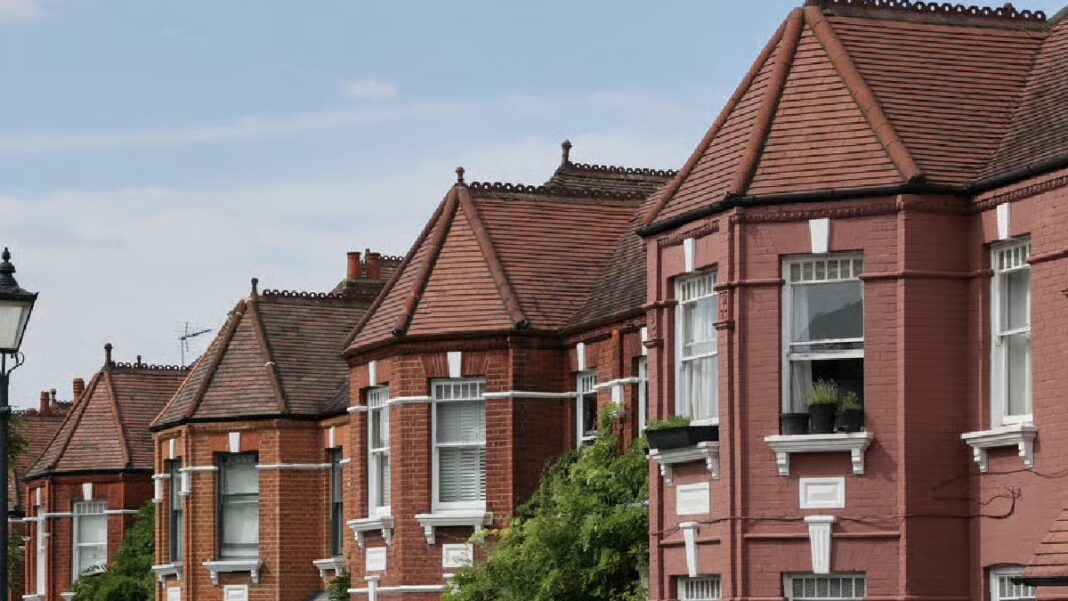
House flipping hits lowest level in 10 years
House flipping activity has dropped to its lowest level in a decade as rising taxes, expensive renovations, and weaker house price growth reduce investor profits.
New research from property agency Hamptons shows that the number of homes bought, renovated, and resold within 12 months has fallen by nearly half over the past 10 years. In 2016, around 21,520 properties were flipped across England and Wales, compared with just 10,570 in 2025.
Flipped homes now account for only 1.5% of all property transactions, down from 2.4% in 2016 — the lowest share recorded in the last decade.
London has seen the sharpest decline, with just 0.9% of property sales classified as flips. A decade ago, 2.1% of London transactions involved flipping.
Why flipping has become less attractive
According to Hamptons, several factors have reduced the profitability of flipping property.
One major factor is higher stamp duty on second homes. In 2016, the government introduced a 3% surcharge on additional properties, which increased to 5% in October 2024. At the same time, stamp duty thresholds reverted to 2022 levels in April 2025, increasing costs for buyers — particularly in high-price areas such as London.
Renovation costs have also increased significantly since the pandemic and the war in Ukraine. Building materials such as timber and steel rose by nearly 80% in 2021, according to the Royal Institution of Chartered Surveyors (RICS).
Falling house prices in parts of southern England have further reduced potential profits. Data from the Office for National Statistics shows London house prices fell by 1.7% between 2025 and 2026.
Hamptons’ Head of Research, Aneisha Beveridge, said the stamp duty surcharge was originally designed to support first-time buyers, but it has also made flipping far less viable in many areas.
She noted that although refurbished homes provide move-in-ready options for buyers, rising renovation costs and weaker price growth have squeezed investor margins.
Profits have dropped sharply
Profitability has declined dramatically over the past decade.
In London, average gross profits from flipping have fallen by 64.5% since 2015, dropping from £100,570 to £35,720 in 2025. Profits fell particularly sharply between 2024 and 2025, declining by 45.8% year-on-year.
Across England and Wales, profits have fallen by an average of 55.1% since 2015. The biggest declines were seen in the South West and South East, where profits dropped by 80.3% and 78.4% respectively.
In the South West, stamp duty accounted for 71% of average gross profits in 2025, leaving investors with limited returns.
Lower-priced properties tend to perform better. Investors purchasing homes for under £100,000 achieved average gains of 45.8% in 2025, while those buying properties costing more than £350,000 made average losses of 4.5%.
Nearly 89% of flipped homes in 2025 were purchased for under £350,000.
As a result, more affordable regions are seeing stronger performance. The North East is the only region where profits after stamp duty have increased since 2015, rising by 27%. Around 3% of homes sold in the region in 2025 were flipped, making it the UK’s current hotspot for flipping activity.
Stamp duty costs in the North East average around £6,000 per flipped property — about 26% of gross profit — compared with around £30,000 in London, where the tax represents nearly half of profits.
London boroughs see steep declines in flipping activity
The proportion of flipped homes has fallen in almost every London borough.
Waltham Forest experienced the largest decline. In 2015 and 2016, between 4.8% and 5.9% of properties were flipped, compared with just 1% in 2025.
Other boroughs that previously saw high levels of flipping — including Newham, Haringey, Brent, and Croydon — have also experienced significant declines, with around 1% to 1.5% of sales now classified as flips.
Expensive areas such as Westminster and Kensington and Chelsea have also seen notable drops. In Westminster, flips accounted for 3.3% of transactions in 2016 but just 0.4% in 2025. Kensington and Chelsea saw a fall from 3% in 2015 to 1% in 2025.
The City of London recorded no flipped properties in both 2015 and 2025. Other boroughs with very low flipping activity in 2025 include Islington (0.1%), Tower Hamlets (0.3%), Westminster (0.4%), and Richmond upon Thames (0.4%).
Outlook for investors
Beveridge concluded that flipping is no longer as profitable as it once was.
While opportunities still exist in lower-priced areas with strong house price growth, rising taxes and higher renovation costs mean investors must be more selective.
Without strong price growth, generating profits from flipping property has become increasingly difficult.