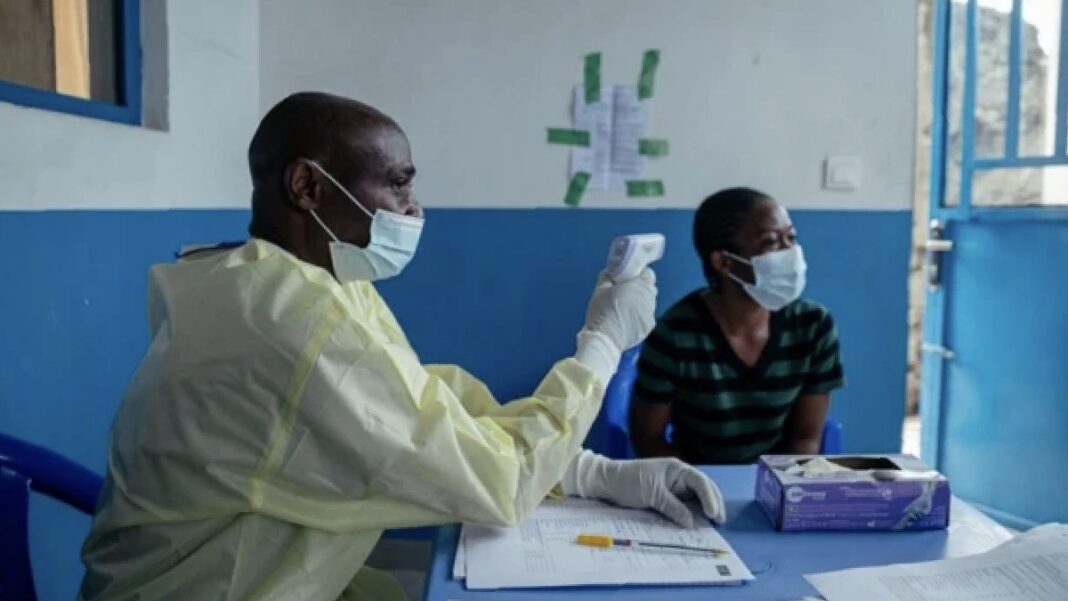
Rare Ebola Outbreak Grows Without Vaccine
A rare and dangerous strain of Ebola is spreading across central Africa, prompting renewed fears among health officials as no approved vaccine currently exists to protect against the virus.
The World Health Organization (WHO) has raised the public health risk of the outbreak in the Democratic Republic of Congo (DRC) from “high” to “very high” after cases were confirmed in both the DRC and neighbouring Uganda. While the organisation says the global risk remains low, the rapid spread has intensified concern among international health experts.
More than 900 suspected cases and 119 deaths have been reported in the DRC, where the outbreak has been concentrated in the eastern city of Bunia. Among the victims are three Red Cross volunteers believed to have contracted the disease while handling bodies during response efforts.
Authorities have suspended flights to and from Bunia in an attempt to slow transmission. However, experts fear the virus may have already crossed into nearby countries, including South Sudan.
The outbreak is being driven by the Bundibugyo strain of Ebola, a rare variant for which no licensed vaccine currently exists. This differs from the more common Zaire strain, which can be prevented using an established Ebola vaccine.
Researchers at Oxford University are working urgently to develop a vaccine targeting the Bundibugyo variant. Scientists estimate it could take at least two to three months before the experimental vaccine is ready for human trials, meaning widespread access in affected regions is unlikely in the near future. Even then, researchers caution there is no certainty the vaccine will prove effective.
Health experts warn that without a protective vaccine, containing the outbreak will rely heavily on public health measures such as isolation, contact tracing and strict infection control.
Although rare, the Bundibugyo strain is not new. It was first identified in western Uganda in 2007 and reappeared in the DRC in 2012. Those earlier outbreaks were relatively limited, with just over 200 combined cases and around 66 deaths.
Scientists remain uncertain about the exact origins of the virus, although some researchers suspect it may have been transmitted to humans through fruit bats.
Like other forms of Ebola, the Bundibugyo strain spreads through direct contact with infected blood or bodily fluids, including contact with contaminated surfaces or the bodies of people who have died from the disease.
Symptoms initially resemble flu and include fever, headache, muscle pain, vomiting and diarrhoea. In severe cases, the illness can progress to internal bleeding, organ failure and death. Experts say people may carry the virus for up to 21 days before symptoms appear.
The UK government has pledged up to £20 million to support efforts to contain the outbreak in eastern DRC. British health authorities have also activated monitoring procedures for healthcare workers returning from affected regions.
However, some experts warn that countries outside Africa must not underestimate the threat.
Dr Derek Sloan, an infectious disease specialist at St Andrews University, said the outbreak highlights the need for continued investment in global health systems.
“This outbreak, along with recent cases of other infectious diseases, shows how important it is to remain vigilant and use effective public health tools to protect populations,” he said.
He added that infectious disease outbreaks in an interconnected world “cannot be dismissed as someone else’s problem” and stressed the importance of preserving funding for global health and international aid efforts.