Denmark Says Greenland Is Not for Sale
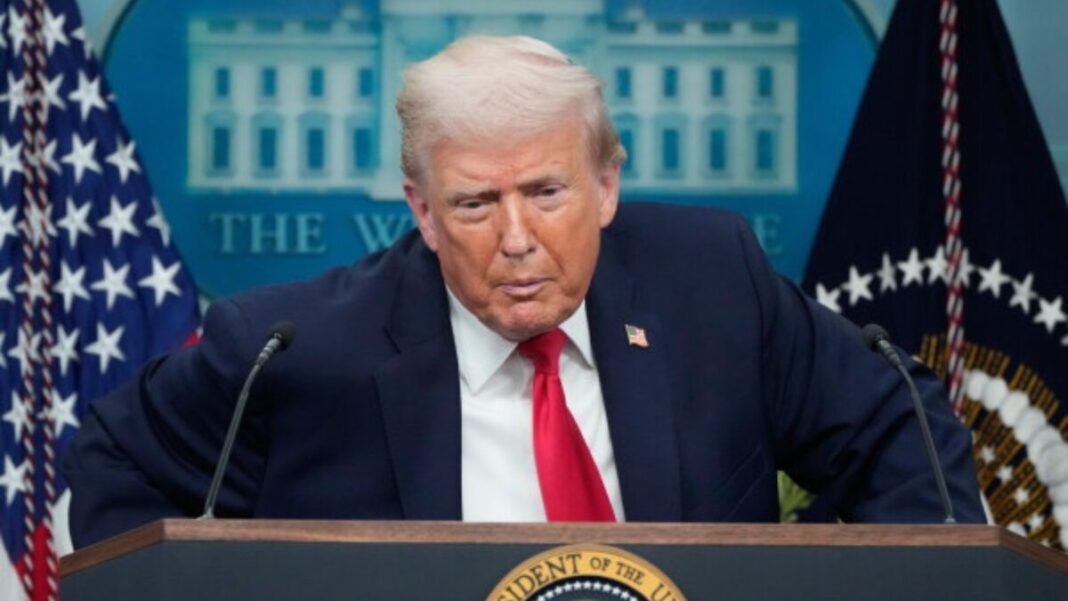
Denmark reaffirmed Wednesday that Greenland is not for sale after U.S. President Donald Trump again said the United States should control the Arctic territory, overshadowing a NATO summit in Ankara, Türkiye, that was intended to highlight allied unity and defense cooperation.
Danish Prime Minister Mette Frederiksen said Denmark is prepared to defend all of its territory, including Greenland, under NATO’s collective defense commitments. She stressed that Greenland’s future should be decided by its own people.
“We hope that everyone, including our allies, will respect the Greenlandic people’s right to self-determination,” Frederiksen said. “Greenland is not for sale.”
Trump’s renewed push for U.S. control of Greenland revived tensions within the alliance, as NATO traditionally focuses on external security threats rather than disagreements among member states. Several European leaders urged allies to remain united in the face of growing security concerns posed by Russia.
Icelandic Prime Minister Kristrún Frostadóttir emphasized that Greenland belongs to its people and said NATO members should prioritize collective security. “Russia remains the biggest threat to these allies,” she said. “We need to stay focused on standing together.”
NATO Secretary-General Mark Rutte sought to reassure allies by saying the United States remains fully committed to the alliance. He also defended recent U.S. military strikes on Iran, describing them as a necessary response after Tehran allegedly violated a ceasefire by attacking merchant vessels in the Strait of Hormuz.
The strikes, along with renewed U.S. sanctions targeting Iranian oil exports, highlighted continued instability in the Middle East. Trump had not publicly commented on the operation at the time.
The summit also focused on defense spending, a long-standing priority for Trump. Rutte noted that several countries—including Estonia, Latvia, Lithuania, Poland, Denmark and Greece—already exceed NATO spending benchmarks. However, newly released NATO figures showed that Slovenia, Belgium, Spain and the Czech Republic are still below the alliance’s previous goal of spending 2% of GDP on defense.
Trump has continued to push allies toward a stronger “NATO 3.0,” calling for European members to take greater responsibility for their own security while the United States maintains its nuclear deterrent. The Pentagon is currently reviewing the U.S. military presence in Europe, creating uncertainty about possible troop reductions.
Ukrainian President Volodymyr Zelenskyy renewed his appeal for NATO membership, arguing that Ukraine’s battle-tested armed forces would strengthen the alliance. He also highlighted Ukraine’s ability to strike military and energy targets deep inside Russia and said Ukrainian forces continue to inflict significant losses on Russian troops.
Meanwhile, U.S. Senator Jeanne Shaheen called for continued support for Ukraine, saying NATO should increase pressure on Russia to negotiate an end to the conflict.
Trump is also expected to meet Syrian President Ahmad al-Sharaa during the summit. Al-Sharaa, who came to power after the fall of Bashar Assad in late 2024, has sought to rebuild Syria’s international relationships despite his past ties to al-Qaida. Trump has expressed support for his efforts, while some regional officials have voiced concern over comments suggesting Syria could play a greater role in confronting Hezbollah.
The NATO summit comes at a time of heightened geopolitical tensions, with alliance leaders balancing concerns over Russia, instability in the Middle East, and debates over defense spending and NATO’s future direction.