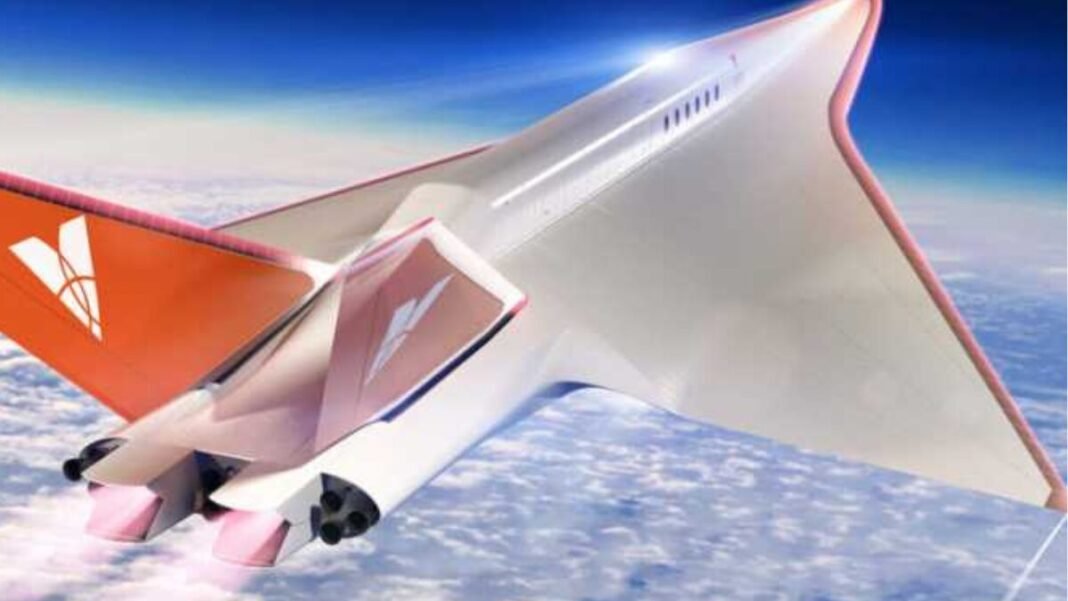
Hypersonic Jet Could Reach Australia in 3 Hours
More than two decades after Concorde’s retirement, Europe is exploring a new era of ultra-fast air travel. A concept under development by the European Space Agency (ESA) could one day transport passengers from London to Sydney in as little as three hours—far faster than today’s journeys, which typically take between 21 and 24 hours with connections, or around 22 hours under future nonstop plans.
Unlike Concorde, which cruised at around twice the speed of sound, ESA’s proposed Invictus aircraft is designed to operate at hypersonic speeds, exceeding five times the speed of sound. The ambitious project aims to push aviation technology beyond conventional supersonic travel and closer to the edge of space.
Early Development Stage
The Invictus programme remains in its initial development phase, with engineers currently focused on designing and testing the technology rather than building a passenger aircraft. According to ESA, the vehicle is expected to fly at an altitude of approximately 80,000 feet, nearly twice the cruising height of today’s commercial airliners.
The project’s design phase is expected to conclude later this year, supported by an investment of around €7 million.
More Than Passenger Travel
Experts believe the technology could have applications beyond commercial aviation. Gordon Stevenson, Director of Spaceport Machrihanish, said the aircraft could potentially serve both civilian and aerospace industries, including satellite deployment.
He noted that, if the technology proves successful, journeys such as London to Sydney could eventually be completed in around three hours—dramatically reducing current travel times.
Gateway to Space
ESA also sees hypersonic technology as a stepping stone toward broader aerospace innovation.
Tommaso Ghidini, Head of ESA’s Mechanical Department, has described hypersonic flight as a transformative technology with the potential to reshape global mobility, strengthen defence capabilities, and improve access to space.
Commercial Flights Still Years Away
Despite the excitement surrounding the project, commercial passenger operations remain a long-term goal. If development progresses successfully, the first commercial services could potentially arrive in the mid-2030s, although significant technical and regulatory challenges remain.
In the meantime, Australia’s national carrier Qantas continues work on Project Sunrise, which aims to launch nonstop flights between London and Sydney by 2027. Those services are expected to take around 22 hours, making them the world’s longest commercial flights.
While Project Sunrise represents a major milestone for long-haul aviation, ESA’s hypersonic vision offers a glimpse of a future where intercontinental journeys could be measured in hours rather than nearly an entire day.
If successful, Invictus could mark the beginning of a new chapter in aviation—bringing ultra-fast global travel and even easier access to space within reach.