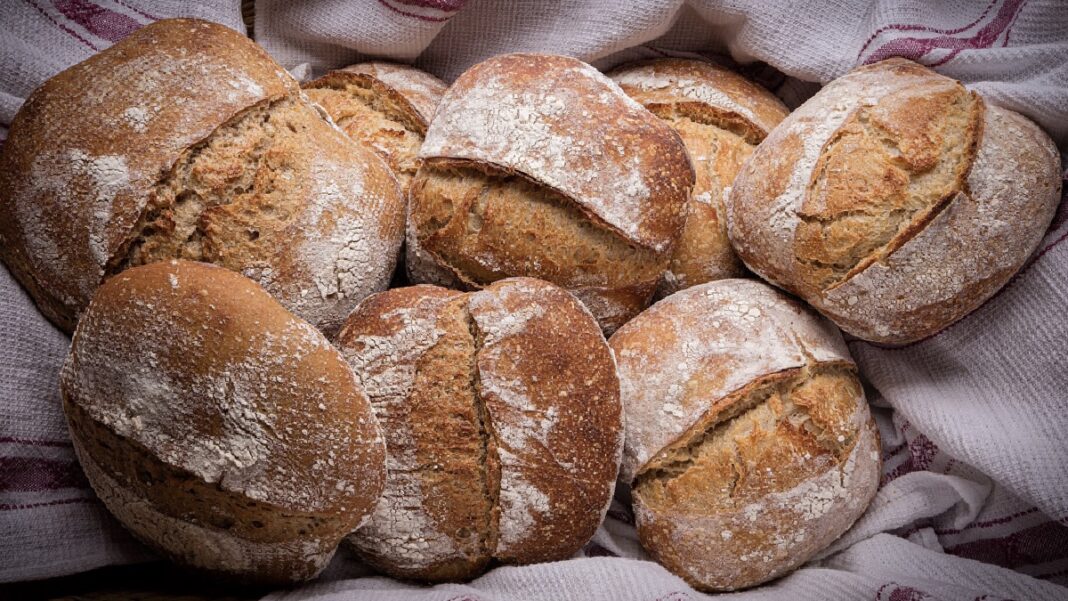
Ancient Yeast from Ötzi Used to Make Sourdough
Researchers have successfully baked sourdough bread using yeast discovered in the remains of Ötzi the Iceman, a frozen mummy who died more than 5,300 years ago in the Alps.
Ötzi, one of the world’s best-preserved ancient humans, was found in 1991 by hikers in the mountains along the border between Austria and Italy. After being killed by an arrow, his body remained trapped in ice for millennia, preserving an extraordinary snapshot of prehistoric life.
In a new study published in Microbiome, scientists found that the mummy is not merely a frozen relic but a living ecosystem of microorganisms. Researchers identified several species of cold-adapted yeast living in Ötzi’s intestines, skin, and water collected from his partially thawed body.
Lead researcher Mohamed Sarhan of Eurac Research in Italy said the team was surprised to discover active yeast inside the mummy. According to the researchers, some of these microorganisms are still metabolically active despite thousands of years in a frozen environment.
Genetic analyses suggested the yeast colonized the body shortly after death and has survived alongside the mummy ever since. The researchers described the microorganisms as long-term companions on Ötzi’s journey through the ages.
Curious about the yeast’s potential, the team cultivated it in laboratory conditions. Inspired by the common association between yeast and baking, they attempted to use it to create sourdough bread.
The process was not immediately successful. However, after several months of experimentation, the researchers managed to produce what Sarhan described as a “very, very good sourdough” loaf.
Beyond baking, the study suggests the yeast may have practical applications. The microorganisms were found capable of breaking down phenol, a chemical used to treat the mummy after its discovery. This ability could potentially be useful in environmental cleanup efforts involving chemical contamination.
The research also revealed fascinating details about ancient human gut bacteria. Scientists identified bacterial species in Ötzi’s microbiome that are nearly absent in modern industrialized populations but still exist among some traditional communities in Africa and South America. Similar bacteria have also been found in ancient human remains preserved in Austrian salt mines.
These findings suggest that the gut microbiome of ancient humans differed significantly from that of modern populations, likely due to diets rich in whole grains and fiber.
Researchers emphasize that Ötzi continues to provide unique insights into prehistoric life, health, and human evolution. While questions remain about whether the yeast could affect the mummy’s preservation, the study highlights how even after more than five millennia, Ötzi still has new stories to tell.
Source AFP