Every country to withdraw from World Cup as Iran considers 2026 USA boycott
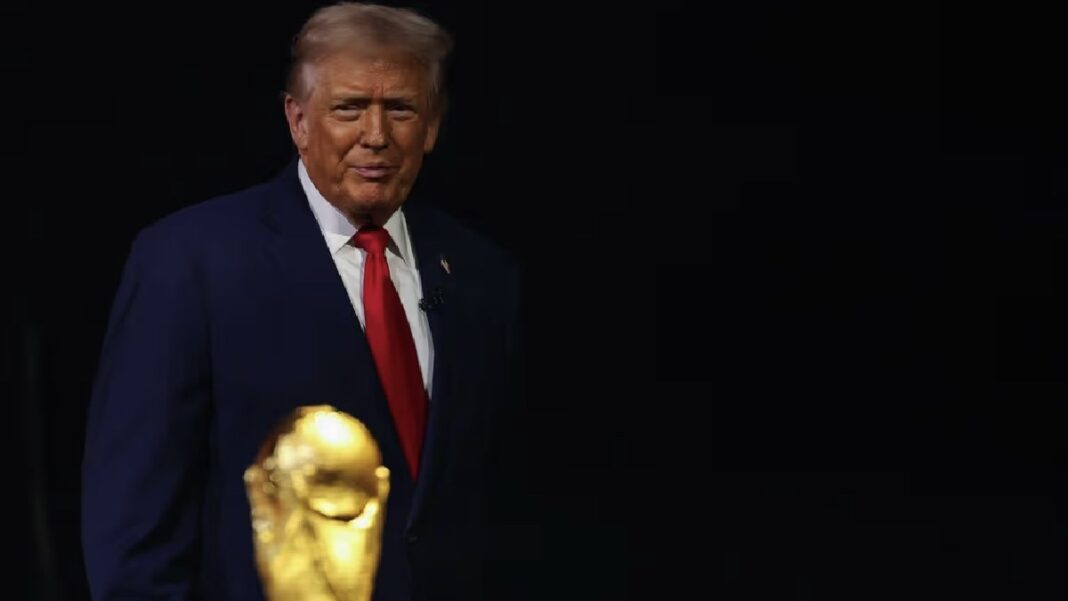
Iran may become the latest nation to withdraw from a FIFA World Cup amid escalating political tensions in the Middle East. Reports suggest Iranian officials are considering pulling out of the 2026 tournament — set to be hosted by the United States, Canada and Mexico — following heightened conflict involving the United States and Israel.
Despite successfully topping their Asian qualifying group, speculation inside Iran indicates participation in the expanded 48-team competition is under review. If Iran were to withdraw after qualifying, it would mark one of the most significant political boycotts in World Cup history.
While a fully qualified nation has rarely withdrawn from the finals for political reasons, football’s showpiece event has previously been shaped by geopolitical disputes and boycotts.
Uruguay declined 1934 invitation
1934 FIFA World Cup
Reigning champions Uruguay chose not to defend their title in 1934. After hosting and winning the inaugural 1930 tournament, Uruguay protested when several European nations refused to travel to South America for the first edition. In retaliation, the South Americans declined to compete in Italy four years later. It remains the only World Cup where the defending champions did not participate.
Austria’s 1938 withdrawal
1938 FIFA World Cup
Austria had qualified and were considered one of Europe’s strongest sides ahead of the 1938 tournament. However, following Nazi Germany’s annexation of Austria (the Anschluss), the national team was dissolved. Some players were absorbed into the German squad, though Austrian star Matthias Sindelar famously refused to represent the regime.
India’s 1950 absence
1950 FIFA World Cup
India qualified for the 1950 World Cup by default after other teams withdrew during qualification. However, they ultimately did not travel to Brazil. While a long-standing myth claimed FIFA banned barefoot participation, the real reasons were financial constraints, insufficient preparation time and internal selection issues.
African boycott in 1966
1966 FIFA World Cup
No African nation competed at the 1966 tournament after African federations collectively boycotted the qualification process. The protest stemmed from FIFA allocating just one shared finals place for Africa, Asia and Oceania combined — a decision viewed as discriminatory.
Chile and the ‘ghost game’ of 1973
1974 FIFA World Cup
In one of the most unusual episodes in World Cup history, the Soviet Union refused to play the second leg of a qualifying playoff in Santiago against Chile, protesting the regime of dictator Augusto Pinochet. Chilean players walked onto the pitch alone and scored into an empty net before the match was abandoned, sending Chile through to the finals.
Modern-era protests
2022 FIFA World Cup
Although no team withdrew from the 2022 tournament in Qatar, the competition saw several symbolic protests by players and federations over human rights concerns and LGBTQ+ policies in the host nation.
What would Iran’s withdrawal mean?
If Iran were to boycott the 2026 World Cup after qualification, it would represent one of the clearest modern examples of a nation pulling out of the finals on political grounds. FIFA would likely need to determine whether a replacement team would be selected or if the tournament structure would be adjusted.
For now, Iran’s participation remains officially unchanged. However, history shows that global politics and football have often intersected — sometimes dramatically — on the sport’s biggest stage.