Dual British Nationals Without UK Passport Risk Being Denied Boarding from 25 February
British dual nationals who do not hold a valid British passport could be prevented from entering the UK under new rules taking effect on 25 February, as the government rolls out its Electronic Travel Authorisation (ETA) system.
From that date, dual nationals will no longer be able to travel to the UK using only a foreign passport. Instead, they must present either a valid British passport or a Certificate of Entitlement, which costs £589. Without one of these documents, airlines, ferry operators and train companies may refuse boarding.
Although British and Irish citizens are exempt from applying for an ETA, transport carriers are now required to verify that passengers have the correct documentation before departure. This means dual nationals must prove their right to enter the UK prior to travel, rather than resolving issues at the border.
What Is Changing?
Previously, British dual nationals were able to travel using a foreign passport without holding a certificate of entitlement. While this sometimes led to delays as Border Force officers confirmed their citizenship status, entry was generally permitted.
Under the new system, carriers will not be allowed to transport travellers who cannot demonstrate their British citizenship with the appropriate documents. As British citizens cannot apply for an ETA or visa to enter the UK, dual nationals must instead obtain a British passport or a certificate of entitlement.
Non-visa nationals from 85 countries will also be required to secure an ETA before travelling to the UK as part of the government’s transition to a fully digital border system.
Passport or Certificate: What Are the Costs?
Applying for a British passport costs £94.50, making it significantly cheaper than a Certificate of Entitlement, which costs £589.
The Home Office says it has been advising dual nationals since October 2024 to ensure they hold the correct documents for travel. Public information campaigns about the ETA changes have been running since 2023.
A government spokesperson said that without a British passport or certificate of entitlement, carriers cannot confirm a passenger’s British citizenship, which may result in delays or refusal to board.
Those who already hold a physical certificate of entitlement will automatically receive a digital version. However, they must create a UK Visas and Immigration (UKVI) account to link the certificate to their foreign passport.
Irish citizens are not affected by the new documentation requirements and can continue travelling to the UK using their Irish passport.
Why Is the UK Introducing the ETA?
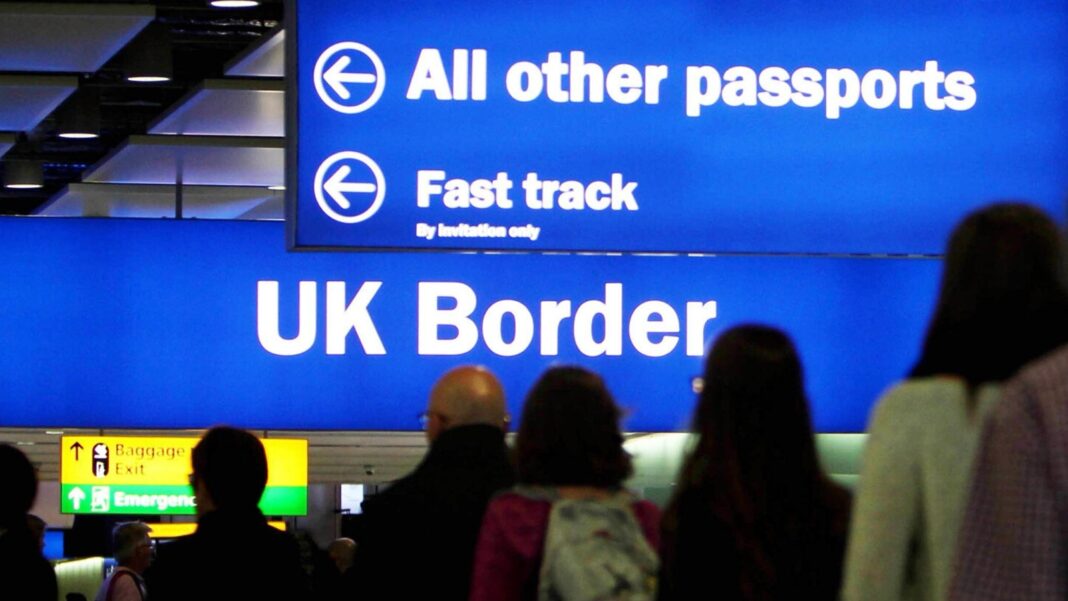
The government says the ETA scheme is designed to create a more streamlined and secure digital immigration system. Officials argue the changes will speed up entry at the border, reduce queues and strengthen security checks by screening travellers before they arrive.
An ETA costs £16, allows multiple trips to the UK and permits stays of up to six months per visit. The authorisation is valid for two years, although the government plans to increase the fee to £20 in the future.
The UK’s system mirrors similar developments in the European Union, where non-EU citizens are now required to obtain travel clearance under the European Travel Information and Authorisation System (ETIAS) before entering EU countries.
With the new rules approaching, dual British nationals are being urged to review their travel documents carefully to avoid disruption and the risk of being turned away before departure.