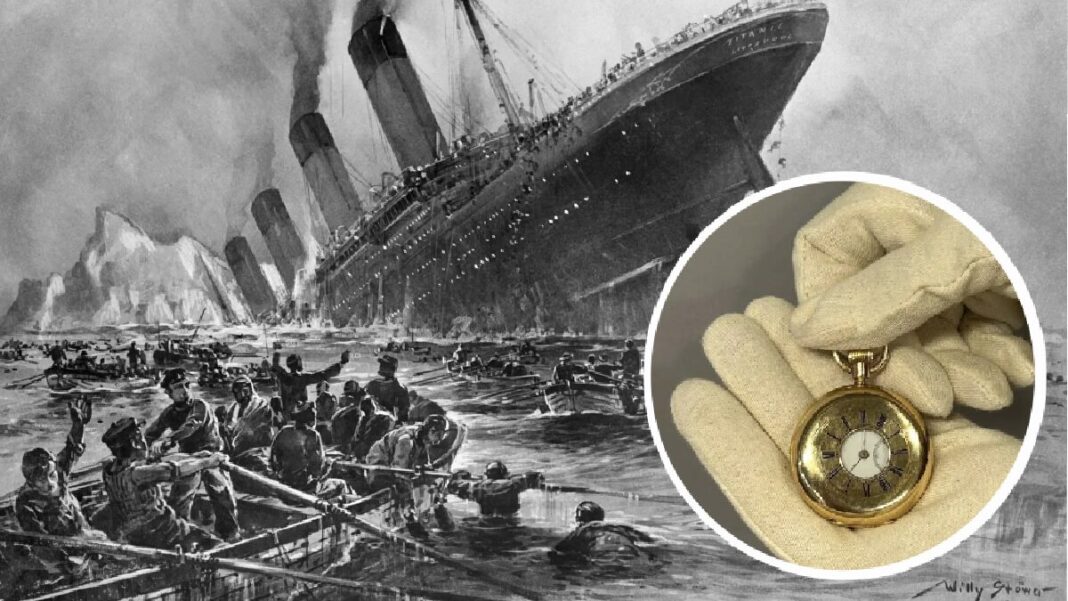
Gold watch tied to Titanic lifeboat claim
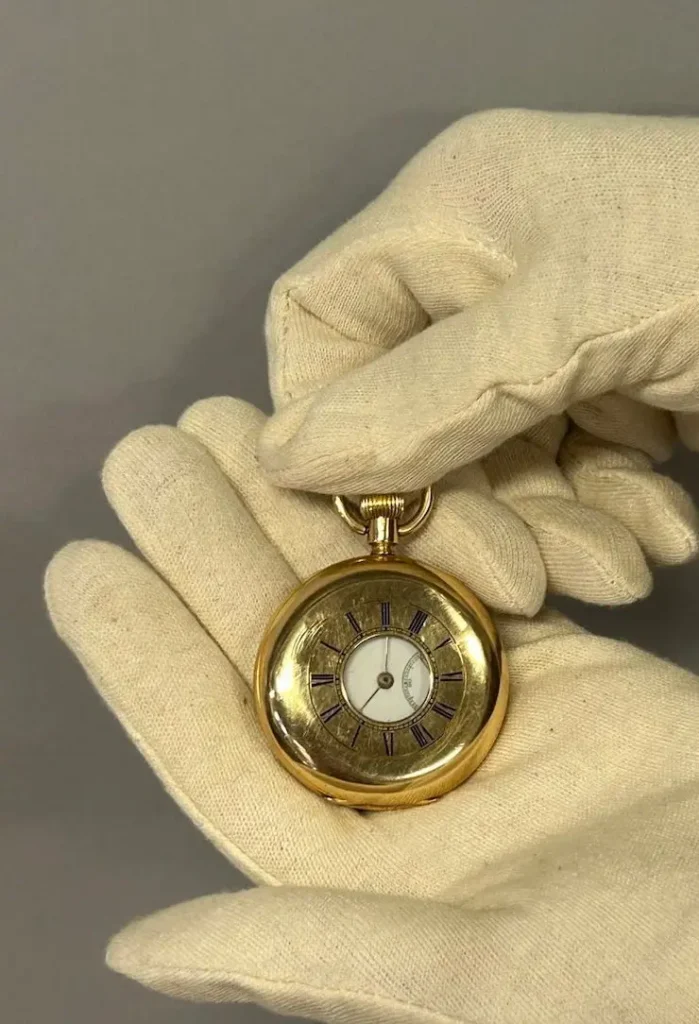
A gold pocket watch believed to be connected to one of the most debated survival stories from the sinking of the RMS Titanic is expected to sell for as much as $68,000 at auction later this month.
The 19th-century timepiece will be offered by John Nicholson’s Auctioneers, with estimates placing its value between roughly $41,000 and $68,000.
According to long-standing accounts, the watch once belonged to passenger Albert Caldwell and may have been handed to a crew member during the chaotic final moments before the Titanic sank in April 1912. Historians and collectors continue to debate whether the watch was used as a bribe to secure a place on a lifeboat for Caldwell’s family or whether it was simply given later as a gesture of gratitude.
The Titanic struck an iceberg during its maiden voyage from Southampton to New York and sank in the early hours of April 15, 1912. More than 1,500 of the approximately 2,200 passengers and crew lost their lives, making it one of history’s deadliest peacetime maritime disasters.
The controversy surrounding the watch centers on the survival of the Caldwell family. Albert Caldwell, his wife Sylvia, and their infant son Alden all escaped the sinking aboard Lifeboat 13. Over the decades, different versions of their rescue story emerged, fueling speculation about how the family managed to secure spots on the overcrowded vessel.
In interviews given later in life, Caldwell claimed he learned from stokers below deck that the situation aboard the Titanic was far more serious than many passengers realized. He said Lifeboat 13 was temporarily held in place while stokers and the Caldwell family climbed aboard.
Other interpretations of the story have painted Caldwell either as a desperate father protecting his wife and child or as someone who may have received special assistance from crew members.
Adding to the mystery is the uncertain journey of the watch itself. A previous sale in 1998 connected the item to a crewman identified only as “Elliot C.” New research suggests the surname may not have been Everett, as once believed, and that the watch could instead have belonged to another member of the Titanic’s engine-room crew.
A letter accompanying the watch describes it as a treasured family possession and references its unusual history. The watch also carries an engraving marking its presentation to James Caldwell by employees of the Pumpherston Oil Company in 1896.
Whether the watch served as payment for survival or simply as a token of appreciation remains unresolved. Still, its connection to one of the Titanic’s enduring mysteries is expected to attract strong interest from collectors and historians alike when it goes to auction.