Trump and Erdoğan Shape NATO Summit Talk
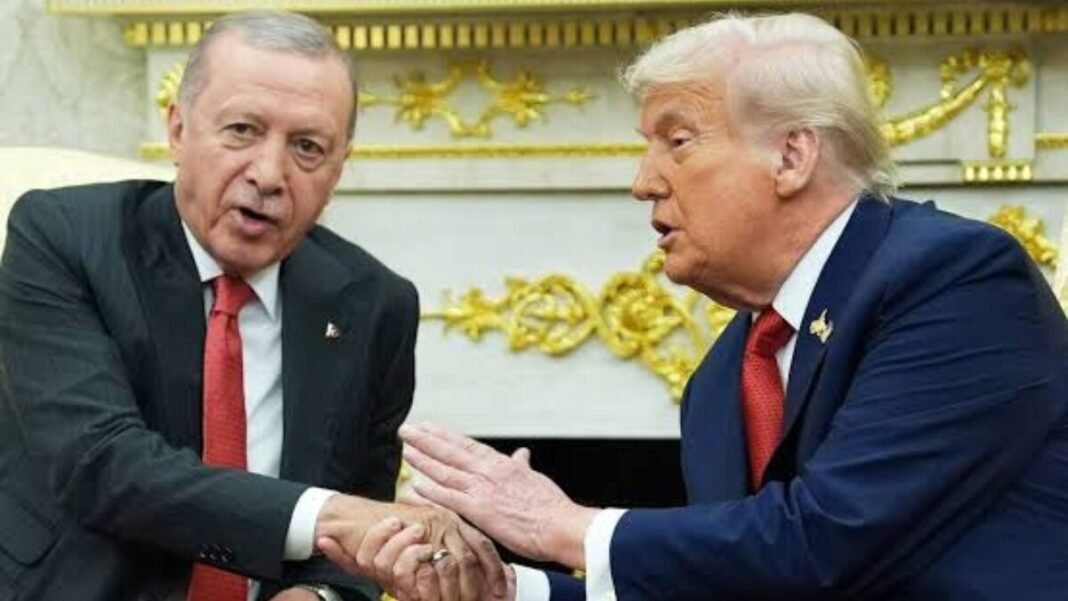
As NATO leaders prepare to gather in Ankara, Turkish President Recep Tayyip Erdoğan has emerged as one of President Donald Trump’s closest partners within the alliance. Their relationship, built over nearly a decade, is widely viewed as pragmatic and transactional, with both leaders often prioritizing direct action over lengthy diplomatic processes.
According to former U.S. officials and diplomats, Trump values Erdoğan because he consistently follows through on commitments. During a recent meeting with NATO Secretary General Mark Rutte, Trump described Erdoğan as both a friend and a respected leader, stating, “Everything I’ve ever asked him for, he’s done.”
Several past events have reinforced that perception. In 2018, Erdoğan released an American pastor after Trump imposed sanctions on Turkey. In 2019, Turkey agreed to a ceasefire in northern Syria following negotiations with Trump administration officials. More recently, Erdoğan quickly endorsed Trump’s Gaza peace initiative, strengthening its regional credibility.
These interactions have transformed Erdoğan’s role within NATO. Although Turkey has often been criticized by allies over democratic backsliding and its increasingly authoritarian domestic politics, some analysts argue that Erdoğan’s personal relationship with Trump has become a strategic advantage for the alliance. With tensions frequently arising between Trump and several Western European leaders, many NATO officials believe Erdoğan is well positioned to help ensure a smoother summit.
The shift has become even more noticeable after Trump’s recent disagreement with Italian Prime Minister Giorgia Meloni, who had previously been regarded as Europe’s closest political ally to the U.S. president. Some observers believe Erdoğan has effectively filled that diplomatic space.
Despite this, Erdoğan remains a controversial figure among many NATO members. His government continues to face criticism over the imprisonment of opposition figures, restrictions on press freedom, and the suppression of protests. Turkey also maintains open communication with Russia, a policy that differs sharply from the tougher stance favored by many European allies.
Even so, analysts note that Trump appears less concerned with these issues than many European leaders. Instead, he views relationships with difficult leaders through a practical lens, believing personal rapport provides greater influence than confrontation.
Ahead of the summit, Erdoğan has also sought to strengthen Turkey’s image as a bridge between East and West. He invited Syrian President Ahmed al-Sharaa to Ankara and emphasized Turkey’s role in regional diplomacy. In a speech before the summit, he called for an “unconditional” security framework extending “from Texas to Ankara.”
Although relations between the two leaders remain positive, one major issue remains unresolved: Turkey’s long-standing effort to receive the F-35 fighter jets it ordered years ago. The United States continues to block the transfer because of Turkey’s purchase of Russia’s S-400 missile defense system. While Washington appears ready to approve a separate $700 million aircraft engine sale, the future of the F-35 agreement remains uncertain.
Experts caution that the Trump-Erdoğan relationship, despite its apparent strength, remains unpredictable. Both leaders are known for making abrupt political decisions, meaning the direction of their partnership—and its impact on NATO—could change quickly depending on future events.