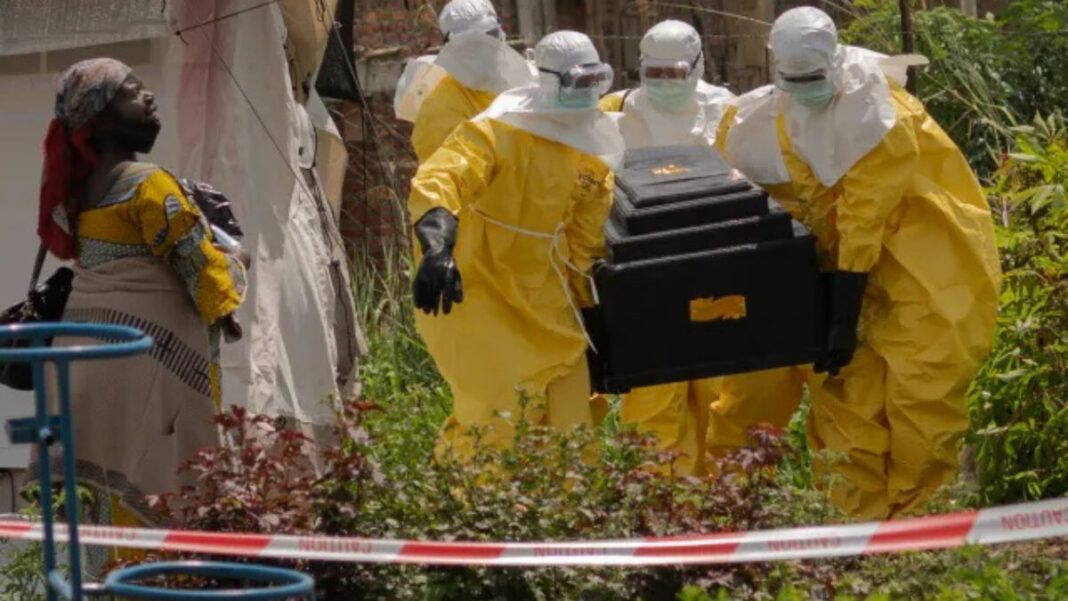
Aid Cuts Blamed for Slow Ebola Outbreak Detection
Former CDC Director Dr. Robert Redfield has warned that the ongoing Ebola outbreak in Central Africa could escalate into a serious regional health emergency, amid concerns over delayed detection and weakened healthcare response systems.
Speaking to NewsNation, Redfield described the outbreak as a major international public health concern and suggested it could spread beyond its current epicenter in the eastern Democratic Republic of Congo (DRC).
“I suspect this is going to become a very significant pandemic,” Redfield said, warning that the virus may spread into neighboring countries such as Tanzania, South Sudan, and Rwanda.
Redfield also questioned why the outbreak was not identified earlier, noting that health officials appeared to recognize the situation only after more than 100 cases had emerged.
The outbreak, believed to have originated in eastern DRC, has reportedly killed more than 130 people. In response, the World Health Organization (WHO) declared it a Public Health Emergency of International Concern over the weekend, though the agency stopped short of classifying it as a pandemic.
WHO officials say investigations are continuing to determine exactly when and where the outbreak began. Anais Legand, a WHO technical officer specializing in viral threats, told reporters in Geneva that the scale of transmission suggests the virus may have been circulating undetected for months.
“Given the scale, we are thinking that it has started probably a couple of months ago,” Legand said.
The first suspected Ebola-related death linked to the outbreak was reported on April 20.
Health experts say the outbreak is being driven by the rare Bundibugyo strain of Ebola, for which no approved vaccine currently exists. According to WHO estimates, the strain carries an average fatality rate of about 40 percent, increasing concerns over containment efforts.
Questions have also emerged over whether foreign aid and public health funding reductions may have contributed to the delayed response.
Heather Reoch Kerr, Congo country director for the International Rescue Committee, said cuts to health and surveillance programs left the region vulnerable.
“Funding cuts have left the region dangerously exposed,” Kerr told Politico. She said the recent spike in reported infections likely reflects surveillance systems only now detecting transmission that had been occurring for some time.
The organization said funding reductions introduced in March 2025 forced it to scale back more than half of its health and outbreak preparedness programs in Ituri Province, considered the center of the outbreak.
Meanwhile, U.S. officials say they are assisting a small number of Americans affected by the situation. Some Americans in the region are believed to have been exposed to suspected Ebola cases.
Despite growing concern abroad, the CDC says no cases linked to the outbreak have been reported in the United States and that the risk to the American public remains low.