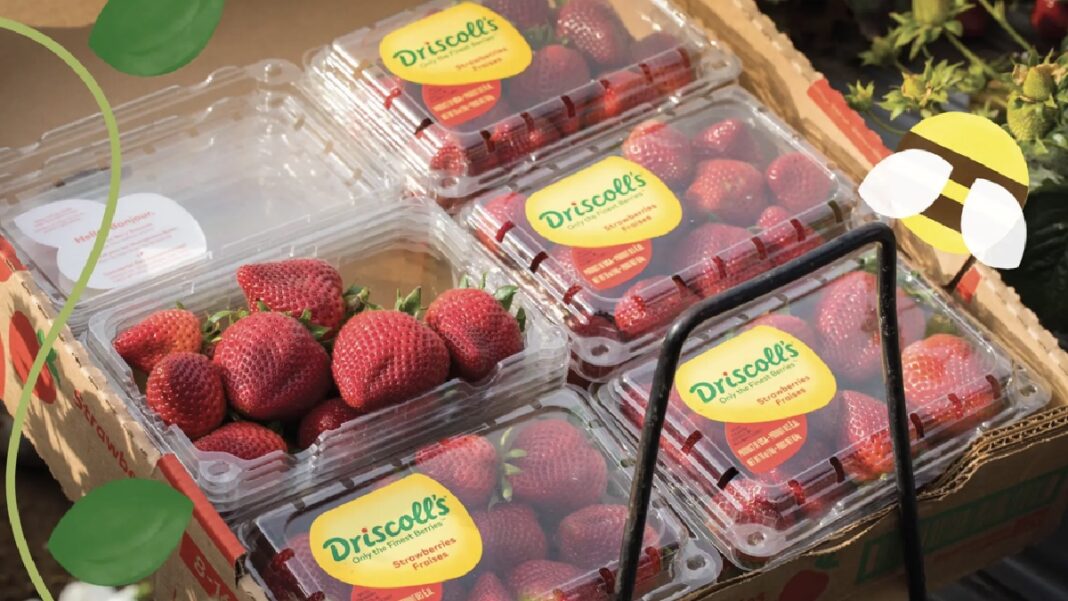
Pesticide Residues Found in Popular Berries
An independent consumer investigation has reported the presence of multiple pesticide residues — including several linked to PFAS chemicals — in conventionally grown strawberries sold by Driscoll’s, one of the best-known berry brands in the United States.
Consumer advocacy group Mamavation purchased two containers of Driscoll’s strawberries from a Southern California grocery store, one organic and one conventionally grown, and submitted them to an EPA-certified laboratory for analysis of more than 500 pesticides.
According to the report, Virginia-based Haereticus Environmental Laboratory detected residues of 12 pesticides on the conventional strawberries. Roughly eight of those substances were described as PFAS-linked pesticides or fluorinated compounds. PFAS chemicals are often called “forever chemicals” because some can remain in the environment and human body for extended periods.
The report stated that while the detected levels generally appeared to comply with current US federal pesticide tolerance limits, several exceeded stricter standards used in countries and regions including the European Union, Taiwan, Chile, South Korea, and Russia. Researchers involved in the investigation also raised concerns about the possible long-term effects of cumulative exposure to multiple PFAS-related substances.
In contrast, the organic strawberries tested reportedly showed no detectable pesticide or PFAS residues.
A spokesperson for Driscoll’s said the company follows established food-safety regulations and scientific guidance related to pesticide use. The company stated that its growers operate in compliance with federal, state, and local agricultural standards and undergo regular oversight by agencies including the US Environmental Protection Agency and the California Department of Pesticide Regulation. Driscoll’s also said independent third-party audits are conducted to help ensure safe farming practices.
The investigation identified several pesticide residues in the conventional strawberries, including flonicamid, fludioxonil, flupyradifurone, fluxapyroxad, indoxacarb, novaluron, tetraconazole, and TFNG, a breakdown product associated with certain pesticide compounds. Additional non-PFAS pesticides such as cyprodinil, pyrimethanil, quinoxyfen, and THPI were also reportedly detected.
Some of the highest concentrations included:
• 310 parts per billion (ppb) of pyrimethanil
• 302 ppb of THPI, a byproduct linked to the fungicide captan
• 125 ppb of cyprodinil
The report alleged that several residues exceeded international safety thresholds used outside the United States.
Separately, the advocacy organization Environmental Working Group (EWG) recently ranked strawberries among produce items with the highest number of detectable pesticide residues. According to the group, 99 percent of tested strawberry samples contained at least one pesticide residue, while nearly one-third contained 10 or more.
Federal regulators maintain that pesticide residues found below established EPA tolerance levels are considered safe based on current scientific evidence. However, critics argue that existing regulations may not fully account for the effects of long-term exposure to multiple chemicals at once, especially compounds associated with PFAS.