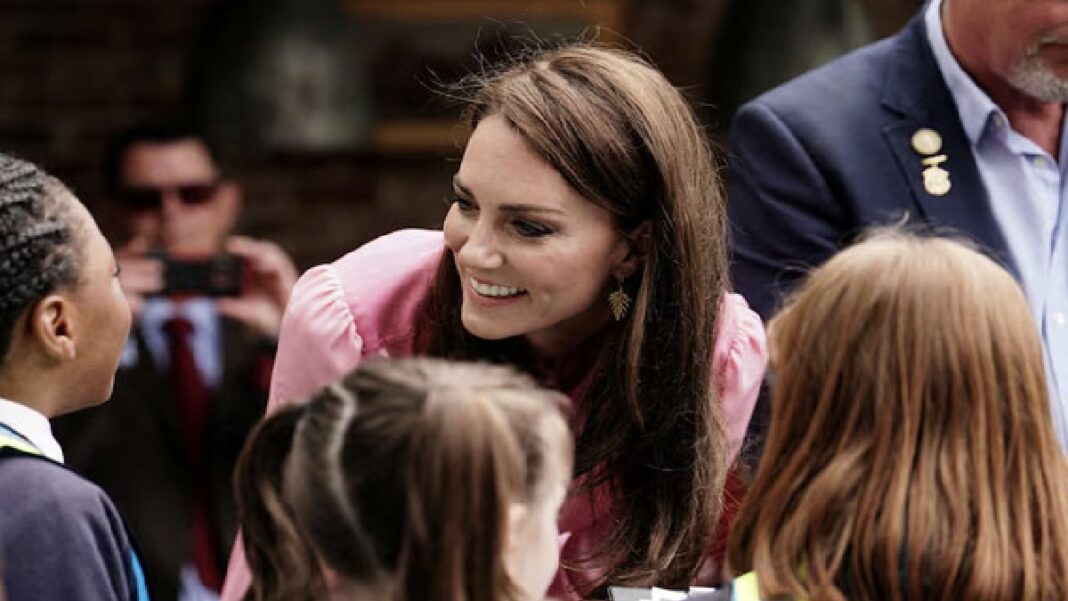
Kate Middleton visits famed early education model
Britain’s Catherine, Princess of Wales will travel to Reggio Emilia next week to learn about the city’s internationally respected early-years education system, developed in the aftermath of World War II.
The visit, scheduled for May 13–14, will mark Kate’s first official overseas engagement since completing cancer treatment. Her itinerary will focus on the origins of the “Reggio Emilia approach,” an educational philosophy that has influenced schools and childcare programs around the world.
After the war, residents of Reggio Emilia — especially local women — helped establish some of Italy’s earliest nursery schools by selling scrap metal from abandoned military equipment left behind by retreating German forces, including a tank. Those grassroots efforts later evolved into a pioneering public education model centered on creativity, community involvement, and emotional development in young children.
Kate’s long-standing interest in early childhood education aligns closely with the principles behind the Reggio Emilia system. In 2021, she launched the Royal Foundation Centre for Early Childhood to promote research and awareness around children’s development and wellbeing.
Marwa Mahmoud, the city’s councillor for education, told Reuters that British representatives had previously visited Reggio Emilia’s educational services, leading to the Princess’s interest in seeing the schools firsthand.
Italian officials said Kate is particularly interested in the movement’s historical roots, its strong public and community-based structure, the important role women played in its creation, and its connection between education and nature.
The Reggio Emilia approach views children as active participants in learning, capable of expressing themselves in many different ways — a concept educators often describe as the “hundred languages” of children. Schools are designed around shared community spaces known as piazzas, along with workshops and creative studios where children explore materials, sounds, and art through hands-on learning.
Today, Reggio Emilia operates 89 infant-toddler centers and preschools, most run by the municipality or the state, with fees based on family income. Preschool participation in the city is among the highest in Italy.
International recognition for the Reggio Emilia model expanded after Newsweek named one of the city’s preschools among the world’s top ten schools in 1991.
Maddalena Tedeschi, president of Reggio Children, said the United Kingdom looked to Reggio Emilia as a major educational reference point for years, with hundreds of British teachers visiting annually before policy changes and funding reductions slowed exchanges.