Burnham’s Rise Puts Starmer Under Pressure
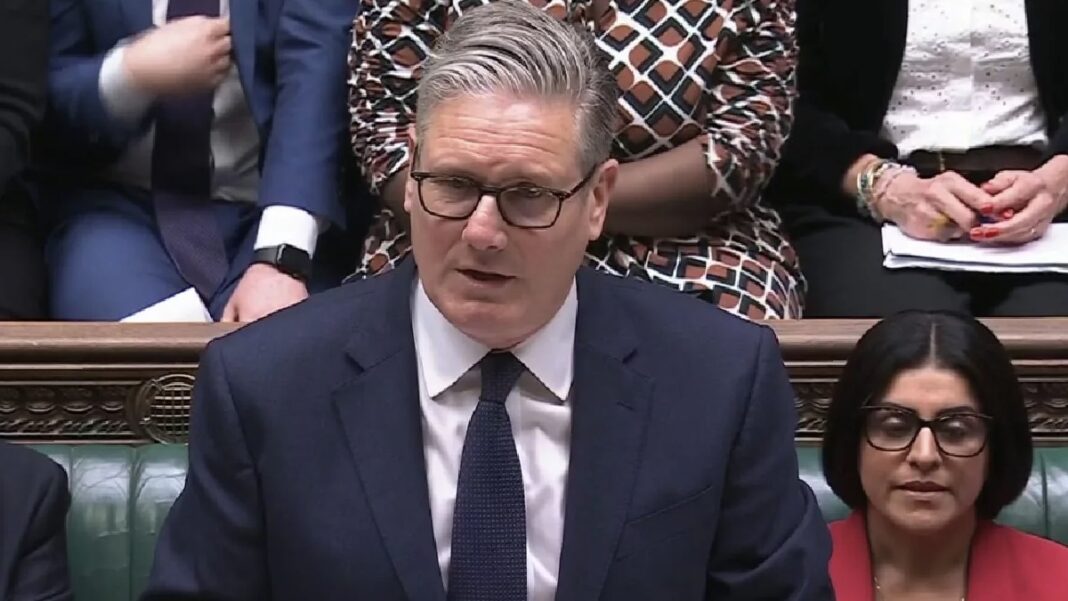
British Prime Minister Keir Starmer is facing one of the most significant moments of his political career, as growing pressure within the Labour Party fuels speculation that he could soon step down.
Although Starmer has repeatedly insisted that he intends to remain in office, many Labour lawmakers are increasingly questioning his leadership following months of declining public support. Reports suggest he may announce a timetable for his departure as early as Monday, the same day Labour rival Andy Burnham is set to take his seat in the House of Commons after winning a recent by-election.
Business Secretary Peter Kyle said Starmer is taking time to consider the challenges facing both his government and his leadership. While dismissing reports of an imminent resignation as speculation, Kyle acknowledged that the prime minister is carefully reflecting on his options.
Starmer spent the weekend with his family at Chequers, the prime minister’s official country residence. He avoided commenting publicly on the political turmoil, instead posting a Father’s Day message on social media about his family and his late father.
Meanwhile, U.S. President Donald Trump weighed in on the situation, claiming that Starmer’s difficulties stemmed from his handling of immigration and energy policy. In a post on Truth Social, Trump predicted that Starmer would resign and criticized his record on both issues.
If Starmer were to leave office, he would become the sixth British prime minister to depart within a decade, highlighting a period of unusual political instability in the United Kingdom.
Frustration with Starmer has been building inside Labour despite the party’s landslide election victory in July 2024. Critics argue that his government has struggled to deliver economic growth, improve public services, and reduce cost-of-living pressures. His leadership has also been damaged by several controversies, including the appointment of Peter Mandelson as ambassador to the United States.
Labour’s political position has weakened as some progressive voters move toward the Green Party, while Reform UK, led by Nigel Farage, continues to gain support and regularly tops national opinion polls.
Burnham’s decisive victory in the Makerfield by-election has intensified speculation about a leadership challenge. The former mayor of Greater Manchester secured nearly 55% of the vote, finishing well ahead of the Reform UK candidate.
Now entering Parliament, Burnham is eligible to contest the Labour leadership. In his victory speech, he signaled his ambitions, arguing that the country is dissatisfied with the current political direction and suggesting that his election could mark a turning point.
It remains uncertain whether Burnham would face competition if Starmer stepped aside. Former Health Secretary Wes Streeting has already indicated that he would enter a leadership race if one takes place.
Despite the growing pressure, Starmer continues to reject calls for his resignation. Speaking on Friday, he said he would compete in any leadership contest and emphasized that he had no intention of walking away from the challenge.
However, some senior Labour figures believe his position is no longer sustainable. Charlie Falconer, a prominent Labour member of the House of Lords, argued that Starmer has lost the authority needed to govern effectively and called for an orderly transition of power coordinated with Burnham.
For now, Starmer’s future remains uncertain, but the coming days could prove decisive for both his leadership and the direction of the Labour Party.