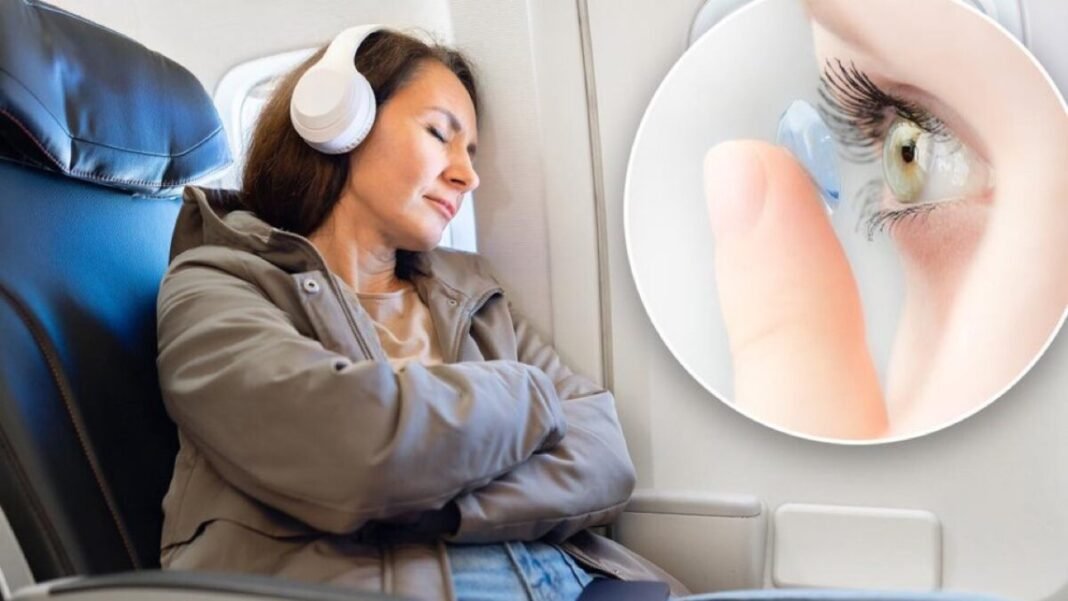
Experts Warn About Contacts During Air Travel
As summer travel ramps up, eye specialists are encouraging contact lens wearers to think twice before boarding a plane without a backup pair of glasses.
According to Dr. Priya M. Mathews, Director of Cornea and Ocular Surface Disease at the Center for Sight, wearing contact lenses is generally safe on short flights if your eyes are healthy, you don’t plan to sleep, and the trip lasts only a few hours.
However, longer flights can create problems. Airplane cabins have very low humidity, which can dry out both your eyes and your contact lenses. As a result, some travelers experience discomfort, a gritty sensation, redness, irritation, or even pain during or after a flight.
The cabin’s pressurized environment can also reduce the amount of oxygen reaching the eyes. When combined with dry air, this may increase the risk of complications such as tiny scratches on the eye’s surface or contact lenses sticking too tightly to the eye. These issues can raise the chances of developing an eye infection.
Dr. Arjan Hura, a board-certified cataract and anterior segment surgeon at the Maloney-Shamie-Hura Vision Institute in Los Angeles, advises travelers never to sleep while wearing contact lenses, as doing so significantly increases the risk of infection. He also recommends choosing glasses if your eyes are already red, irritated, sensitive to light, or if you have an existing eye infection.
To reduce the risk of problems while traveling, experts recommend practicing good lens hygiene by washing your hands before handling lenses, using fresh contact lens solution each time, replacing storage cases regularly, and never rinsing lenses with tap water. Artificial tears may also help relieve dryness, and replacing lenses as scheduled—or taking a short break from wearing them—can give your eyes time to recover.
Travelers using daily disposable lenses should continue following their normal replacement schedule, even when flying across multiple time zones or taking connecting flights.
Both specialists also recommend packing a pair of prescription glasses as a backup in case your lenses become uncomfortable or you lose your contact lens supplies. When carrying contact lens solution, use commercially available travel-size bottles instead of transferring the solution into another container, as doing so may increase the risk of contamination.
For many travelers, a simple switch to glasses during longer flights could help keep their eyes more comfortable and reduce the risk of irritation or infection.