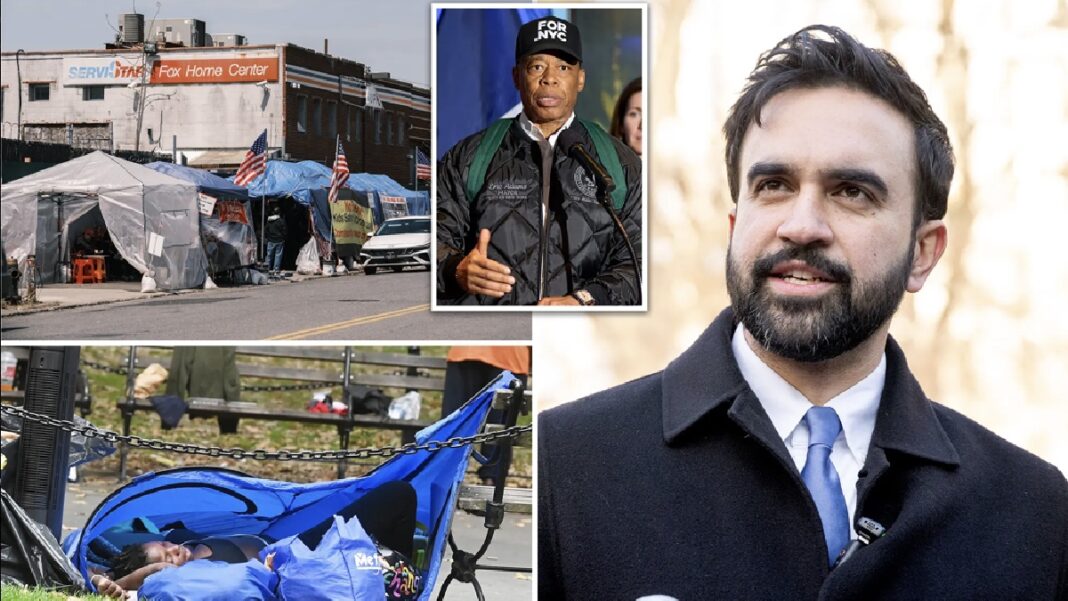
NYC to stop Homeless Camp Sweeps
NEW YORK — Mayor-elect Zohran Mamdani announced Thursday that he will end all homeless encampment sweeps across New York City once he takes office in January, bringing an abrupt close to one of the Adams administration’s most visible and controversial policies.
Speaking at an unrelated press conference in Manhattan, the Democratic Socialist said he would put a full stop to the clearing of makeshift encampments — a practice Mayor Eric Adams made a hallmark of his administration starting in 2022.
“If you are not connecting homeless New Yorkers to the housing that they so desperately need, then you cannot deem anything you’re doing to be a success,” Mamdani said, criticizing the sweeps for failing to move people into permanent housing.
“We are going to take an approach that understands its mission is connecting those New Yorkers to housing… whether it’s supportive housing, rental housing — whatever kind of housing it is.”
Mamdani argued that homelessness in New York is often the result of “political choices,” not an unavoidable reality of urban life. However, the incoming mayor offered no detailed plan for how his administration will address the over 45,000 complaints about encampments logged through 311 in the first eleven months of 2025.
A Major Shift from Adams’ Strategy
Adams made clearing tent cities a top public-safety priority soon after taking office.
“We cannot tolerate these makeshift, unsafe houses on the side of highways, in trees, in front of schools, in parks,” Adams said in March 2022 when launching the initiative.
But a year later, a city comptroller audit found that about 95% of individuals removed from encampments returned to the streets, highlighting the policy’s failure to create lasting solutions.
City Hall has consistently rejected the audit’s conclusions.
Spokesperson Fabien Levy defended the sweeps on Thursday:
“Cherry-picking numbers and sharing them out of context paint a disingenuous picture… these cleanups have actually connected more than 500 New Yorkers to safe, stable housing.”
Levy also emphasized that New York City has the lowest unsheltered homelessness rate of any major U.S. city.
Housing Policy Experts Warn of Capacity Shortages
Several urban housing specialists told reporters that while Mamdani’s intentions align with best practices, the city simply does not have enough supportive housing units to absorb people currently living in encampments.
“Ending sweeps without scaling housing supply sets the city up for visible increases in street homelessness,” said Dr. Elaine Morado, an analyst at the Regional Housing Institute.
“You can’t promise ‘Housing First’ without having the housing.”
Experts caution that unless thousands of units are quickly funded or repurposed, the plan may stall before implementation even begins.
Critics in City Council Fear Public Backlash
Some moderate City Council members argue that Mamdani’s announcement may create political fallout if street conditions worsen.
“New Yorkers are already filing tens of thousands of complaints,” said Councilmember Robert Keane.
“If the administration removes enforcement before new housing is ready, residents may feel abandoned — and that could undermine public support for long-term solutions.”
Council critics also warn that businesses, schools, and transit authorities may pressure City Hall to reinstate sweeps if encampments proliferate.
Community Advocates Support the Shift but Demand Specifics
Homeless advocacy groups welcomed the end of sweeps but expressed concern about the lack of a concrete rollout plan.
“This is the right moral direction, but we need timelines, funding, and accountability,” said Talia Freeman, director of Street Dignity NYC.
“People can’t be left in limbo. Ending sweeps must be paired with immediate investments in safe shelter and permanent housing pathways.”
Advocates emphasized that without a rapid implementation framework, the promise could quickly turn into disappointment for unhoused New Yorkers.