Political tensions shadow Eurovision in Vienna
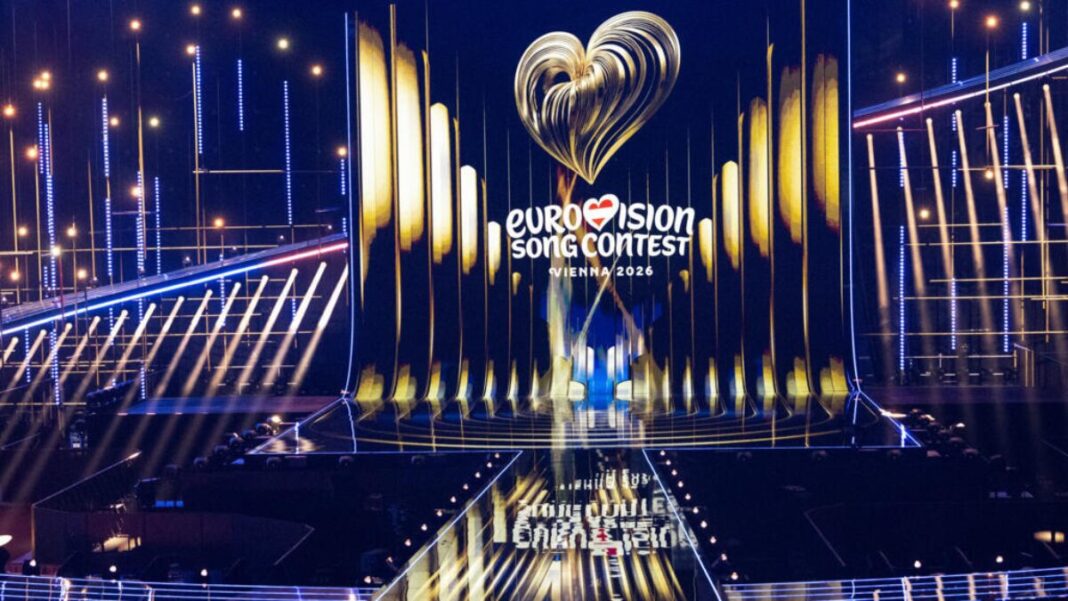
What was expected to be a celebratory 70th anniversary edition of the Eurovision Song Contest has instead become one of the most politically divisive moments in the competition’s history.
This year’s contest, hosted in Vienna, begins Tuesday and concludes with Saturday’s grand final. But alongside the usual excitement surrounding Europe’s largest live music event, organizers are facing boycotts, protests, and criticism over the participation of Israel.
Several countries — including Spain, Netherlands, Ireland, Slovenia, and Iceland — have either withdrawn entirely or chosen not to submit contestants. Some broadcasters in those countries also plan to avoid airing the final altogether.
The dispute stems from ongoing controversy surrounding Israel’s inclusion in Eurovision following the Israel-Gaza conflict that intensified after the Hamas attacks of 7 October 2023. Critics argue that the European Broadcasting Union has applied inconsistent standards, pointing out that Russia was removed from the contest after invading Ukraine in 2022.
Eurovision historians and longtime followers say the atmosphere this year feels unusually subdued. Many fans who traditionally view the contest as a celebration of unity and music now see it overshadowed by political conflict.
The absence of several participating nations could also affect viewing figures. Last year’s final in Basel attracted a record global audience of 166 million viewers, but organizers expect numbers to decline this year because of blackouts and reduced participation.
Meanwhile, Vienna is preparing for demonstrations both supporting and opposing Israel’s presence in the contest. Austrian authorities expect thousands to join pro-Palestinian rallies during Eurovision week, including a march connected to Nakba Day commemorations. Smaller counter-protests supporting Israel’s participation are also planned.
Public opinion inside Austria appears divided as well. A recent survey found that many respondents questioned whether hosting Eurovision is worth the expense, while only a minority believed the contest still strengthens European unity.
Politics have increasingly influenced Eurovision in recent years, including disputes over song lyrics and contestants’ personal backgrounds. Israel’s previous entries in 2024 and 2025 both drew scrutiny because of perceived references to the conflict and the promotion of the acts online.
For the 2026 contest, Israel is represented by singer Noam Bettan with the song Michelle. Although early speculation linked the title to a wounded Israeli soldier from the October attacks, the song itself focuses on a troubled romantic relationship.
Despite the controversy, betting markets still place Israel among the leading contenders. Other favorites include entries from Finland, Greece, and Denmark. The United Kingdom’s act, Look Mum No Computer, is viewed as an outsider for the title.
Even as Eurovision expands globally — with a planned Asian edition later this year in Bangkok — the mood surrounding its landmark anniversary remains far more uncertain than celebratory.