World’s Longest Suspension Bridge Planned to Connect
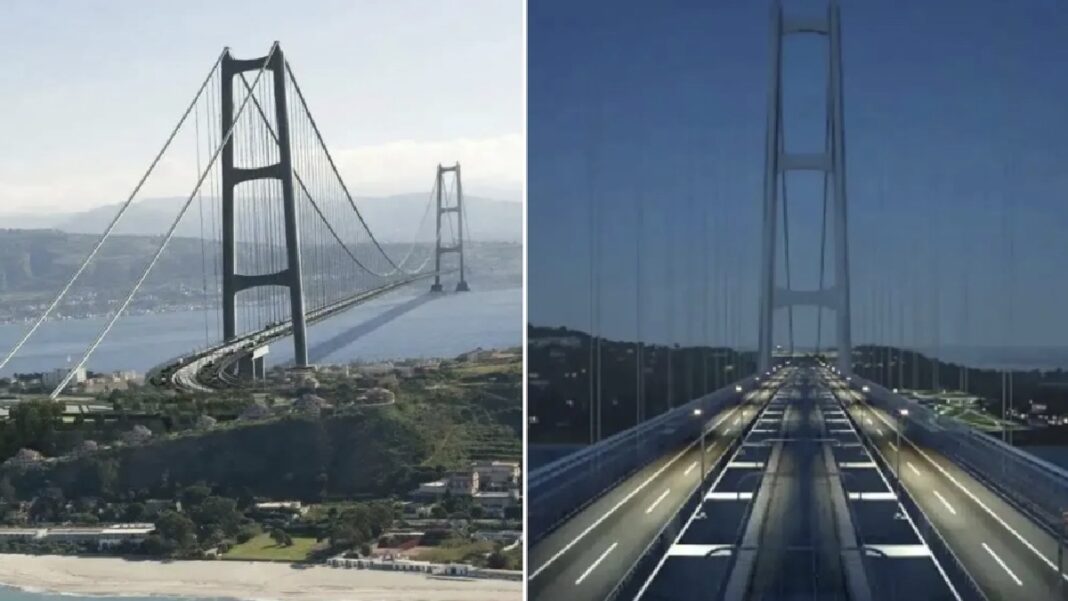
Italy is moving forward with ambitious plans to build the world’s longest suspension bridge, a mega-project that has been debated for nearly 2,000 years. The proposed Messina Bridge would connect Sicily to mainland Italy, dramatically reducing travel time between two of the country’s most popular tourist regions.
A £12 Billion Mega Project
The Messina Bridge project is expected to cost up to £12 billion (€13.5 billion), making it one of the most expensive infrastructure developments in Europe. The European Union has agreed to fund 50% of the executive design costs related to rail infrastructure, contributing around €20 million.
Once completed, the bridge will span 3.6 kilometres (2.2 miles), surpassing Turkey’s 1915 Çanakkale Bridge as the longest suspension bridge in the world.
Design and Engineering Highlights
The bridge will be supported by two steel towers, each standing approximately 1,300 feet (about 400 metres) tall. It will carry both road traffic and rail lines, and engineers claim it will be capable of withstanding:
Wind speeds of up to 292 km/h (181 mph)
• Strong seismic activity in one of the most earthquake-prone regions of the Mediterranean
Architects have also stated that the structure will be designed to survive major earthquakes, addressing long-standing safety concerns following the 1908 Messina earthquake, which killed more than 100,000 people.
Boost for Tourism and Travel
For tourists—especially British holidaymakers—the bridge could be transformative. The crossing time between Sicily and Calabria would drop to just 10 minutes, compared with ferry journeys that often exceed 30 minutes due to queues and delays.
Political Support and Economic Impact
Italian Prime Minister Giorgia Meloni has strongly backed the project, calling it an investment in Italy’s future.
“It is not an easy task, but we consider it an investment in Italy’s present and future,” Meloni said.
Transport Minister Matteo Salvini has set a target completion date of 2032–2033. He claims the project could create up to 120,000 jobs, delivering much-needed economic growth to the poorer regions of Sicily and Calabria.
Salvini has also argued that the bridge would reduce carbon emissions by cutting ferry traffic, describing it as “one of the greenest bridges in the world.”
A Vision Rooted in Ancient History
The idea of linking Sicily to the mainland dates back to Ancient Rome. In 252 BCE, Roman consul Metellus reportedly used connected barrels and boats to transport war elephants across the Strait of Messina.
Despite multiple modern proposals—including a major push in 2009 that was abandoned in 2013—the project has repeatedly stalled due to cost, corruption fears, and environmental concerns.
Legal and Environmental Setbacks
The latest challenge came when Italy’s Court of Auditors ruled that the project violated EU environmental and tender rules, stating that claims of public interest were not supported by sufficient technical documentation.
There is also strong local opposition. Around 4,000 residents living near the Strait of Messina face possible home demolitions, raising the likelihood of prolonged legal battles.
What Happens Next?
Despite the ruling, Meloni’s government has pledged to review the decision carefully and continue pushing the project forward. If approved, the Messina Bridge would become a global engineering landmark, reshaping travel, tourism, and the economy of southern Italy.