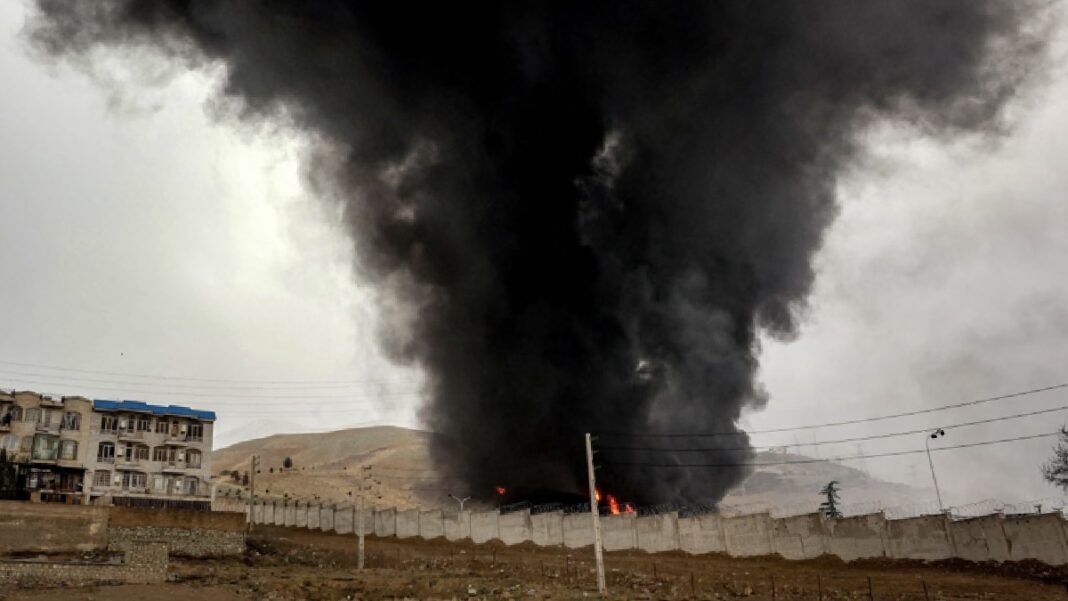
Iran War Adds 5M Tons CO₂ in Two Weeks
An analysis examining the environmental impact of the US–Israel war on Iran claims the first 14 days of the conflict generated approximately 5 million tonnes of CO₂ equivalent emissions, highlighting the growing climate cost of modern warfare.
War’s Climate Impact Draws Global Attention
According to research findings shared with the media, the Middle East conflict is not only causing humanitarian and geopolitical consequences but is also contributing significantly to global greenhouse gas emissions. The analysis estimates that airstrikes, fuel consumption, destroyed infrastructure, and burning oil facilities produced 5,055,016 tonnes of CO₂ equivalent (tCO₂e) within the first two weeks of hostilities.
Researchers warn that damage to energy infrastructure could also lead to increased fossil fuel production in the long term, further complicating global climate targets.
Destroyed Buildings Identified as Largest Emissions Source
The report suggests that the largest share of emissions came from civilian buildings damaged or destroyed during military operations. Based on estimates citing roughly 20,000 damaged civilian structures, emissions from this sector alone are calculated at approximately 2.4 million tCO₂e.
Construction materials such as cement and steel are known to have high carbon footprints, meaning rebuilding efforts may further increase emissions.
Military Fuel Consumption Adds Significant Carbon Footprint
Fuel use from military aircraft, naval vessels, and ground vehicles is estimated at 150–270 million litres in the first 14 days. This level of fuel consumption is estimated to have generated about 529,000 tCO₂e emissions.
Long-range bomber flights, which require large quantities of fuel, are considered a major factor driving the carbon footprint of military operations.
Oil Facility Attacks Increase Environmental Damage
Strikes on fuel storage facilities reportedly caused millions of barrels of oil to burn. The analysis estimates that these fires produced approximately 1.88 million tCO₂e emissions.
Damage to oil infrastructure not only creates immediate environmental harm but may also increase future investment in fossil fuel extraction and supply systems.
Carbon Cost of Military Equipment and Munitions
The report also accounts for emissions associated with destroyed military hardware and the production and deployment of weapons systems.
- Destroyed military equipment: 172,000 tCO₂e
- Missiles, drones, and interceptors used in combat: 55,000 tCO₂e
Experts note that emissions linked to defense sectors are often underreported in global climate accounting.
Pressure on the Global Carbon Budget
Climate scientists estimate that the remaining global carbon budget to maintain a 50% chance of limiting warming to 1.5°C is approximately 130 billion tonnes of CO₂. With current global emissions around 40 billion tonnes annually, large-scale conflicts risk accelerating the depletion of this budget.
Researchers warn that war-related emissions, combined with fossil fuel market disruptions, could slow progress toward international climate targets.
Experts Warn of Long-Term Climate Consequences
Analysts involved in the study suggest geopolitical instability often leads to increased fossil fuel exploration and infrastructure expansion. This trend could lock in future emissions and make climate mitigation efforts more difficult.
According to experts, the environmental impact of modern warfare is becoming an increasingly significant factor in global climate discussions.