Stamp prices rise as delays spark public criticism
The cost of postage has risen once again, sparking criticism of the postal service as it continues to fall short of its delivery targets.
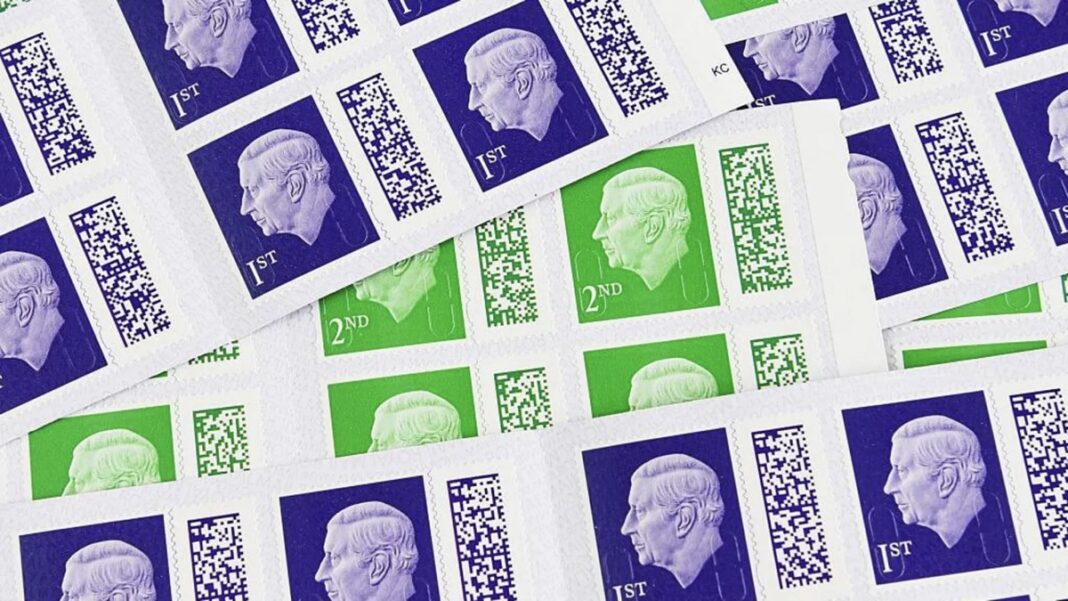
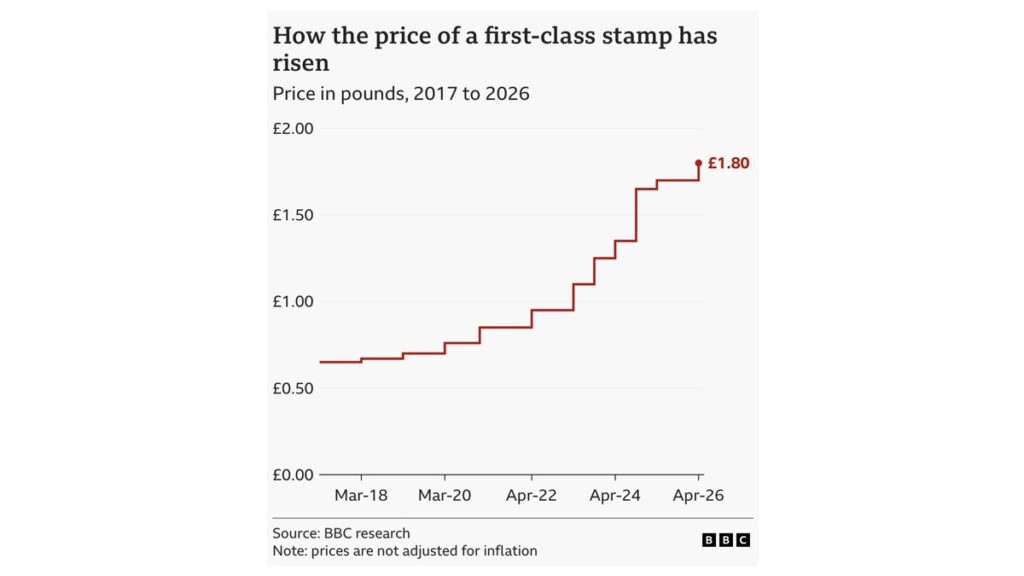
The price of a first-class stamp has increased by 10p to £1.80, while a second-class stamp has gone up by 4p to 91p. Royal Mail says the increases are necessary due to a significant drop in letter volumes, even as the number of delivery addresses continues to grow.
However, the timing of the price rise has frustrated both businesses and consumers, many of whom argue that service standards have not improved. Currently, only 77% of first-class letters arrive within one working day, well below the 93% target.
This latest change marks the eighth stamp price increase in just five years, adding to mounting pressure on Royal Mail. The company has recently faced criticism from MPs and the public regarding delays and reliability issues within its letter service.
From 3 May, business customers will also see increased charges as Royal Mail raises its fuel surcharge by 5% for domestic deliveries and 5.5% for international services. The company cited rising energy costs linked to the Iran conflict as a key factor behind the decision.
Over the past decade, stamp prices have risen sharply. Ten years ago, a first-class stamp cost 64p and a second-class stamp was 55p, meaning the price of a first-class stamp has nearly tripled during that period. Second-class stamp prices are regulated by Ofcom and are allowed to rise annually in line with inflation.
Royal Mail’s managing director of letters, Richard Travers, said the company carefully considers any price changes, aiming to balance affordability with the increasing costs of delivering mail.
Dean Morris, who runs a greeting card business, says slower and less predictable delivery times have mainly affected his company’s reputation rather than its finances. Customers often begin chasing orders six or seven days after dispatch.
He believes second-class mail is sometimes overlooked as Royal Mail prioritises parcel deliveries, despite the fact that many online retailers rely on second-class post as a cost-effective option.
Consumer groups have also expressed concern about the rising cost of stamps alongside declining performance levels. Citizens Advice has argued that price increases should be linked to improvements in service quality.
In recent weeks, Royal Mail has also faced allegations from postal workers who claim they were asked to move or conceal undelivered mail before management inspections to give the impression that delivery targets were being met. The company said it takes such claims seriously and maintains that 92% of letters are delivered on time.
Royal Mail executives were questioned by MPs in March regarding ongoing delays. The company’s owner, Daniel Křetínský, acknowledged that the service has shortcomings but said plans are in place to improve performance.
Liam Byrne, chair of the Business and Trade Committee, said he was “very concerned” by reports of serious failures in the postal system. In February, the committee formally requested assurances from Royal Mail that it would address what it described as “chaos” in some postal areas following the Christmas period.The cost of postage has risen once again, sparking criticism of the postal service as it continues to fall short of its delivery targets.
The price of a first-class stamp has increased by 10p to £1.80, while a second-class stamp has gone up by 4p to 91p. Royal Mail says the increases are necessary due to a significant drop in letter volumes, even as the number of delivery addresses continues to grow.
However, the timing of the price rise has frustrated both businesses and consumers, many of whom argue that service standards have not improved. Currently, only 77% of first-class letters arrive within one working day, well below the 93% target.
This latest change marks the eighth stamp price increase in just five years, adding to mounting pressure on Royal Mail. The company has recently faced criticism from MPs and the public regarding delays and reliability issues within its letter service.
From 3 May, business customers will also see increased charges as Royal Mail raises its fuel surcharge by 5% for domestic deliveries and 5.5% for international services. The company cited rising energy costs linked to the Iran conflict as a key factor behind the decision.
Over the past decade, stamp prices have risen sharply. Ten years ago, a first-class stamp cost 64p and a second-class stamp was 55p, meaning the price of a first-class stamp has nearly tripled during that period. Second-class stamp prices are regulated by Ofcom and are allowed to rise annually in line with inflation.
Royal Mail’s managing director of letters, Richard Travers, said the company carefully considers any price changes, aiming to balance affordability with the increasing costs of delivering mail.
Dean Morris, who runs a greeting card business, says slower and less predictable delivery times have mainly affected his company’s reputation rather than its finances. Customers often begin chasing orders six or seven days after dispatch.
He believes second-class mail is sometimes overlooked as Royal Mail prioritises parcel deliveries, despite the fact that many online retailers rely on second-class post as a cost-effective option.
Consumer groups have also expressed concern about the rising cost of stamps alongside declining performance levels. Citizens Advice has argued that price increases should be linked to improvements in service quality.
In recent weeks, Royal Mail has also faced allegations from postal workers who claim they were asked to move or conceal undelivered mail before management inspections to give the impression that delivery targets were being met. The company said it takes such claims seriously and maintains that 92% of letters are delivered on time.
Royal Mail executives were questioned by MPs in March regarding ongoing delays. The company’s owner, Daniel Křetínský, acknowledged that the service has shortcomings but said plans are in place to improve performance.
Liam Byrne, chair of the Business and Trade Committee, said he was “very concerned” by reports of serious failures in the postal system. In February, the committee formally requested assurances from Royal Mail that it would address what it described as “chaos” in some postal areas following the Christmas period.The cost of postage has risen once again, sparking criticism of the postal service as it continues to fall short of its delivery targets.
The price of a first-class stamp has increased by 10p to £1.80, while a second-class stamp has gone up by 4p to 91p. Royal Mail says the increases are necessary due to a significant drop in letter volumes, even as the number of delivery addresses continues to grow.
However, the timing of the price rise has frustrated both businesses and consumers, many of whom argue that service standards have not improved. Currently, only 77% of first-class letters arrive within one working day, well below the 93% target.
This latest change marks the eighth stamp price increase in just five years, adding to mounting pressure on Royal Mail. The company has recently faced criticism from MPs and the public regarding delays and reliability issues within its letter service.
From 3 May, business customers will also see increased charges as Royal Mail raises its fuel surcharge by 5% for domestic deliveries and 5.5% for international services. The company cited rising energy costs linked to the Iran conflict as a key factor behind the decision.
Over the past decade, stamp prices have risen sharply. Ten years ago, a first-class stamp cost 64p and a second-class stamp was 55p, meaning the price of a first-class stamp has nearly tripled during that period. Second-class stamp prices are regulated by Ofcom and are allowed to rise annually in line with inflation.
Royal Mail’s managing director of letters, Richard Travers, said the company carefully considers any price changes, aiming to balance affordability with the increasing costs of delivering mail.
Dean Morris, who runs a greeting card business, says slower and less predictable delivery times have mainly affected his company’s reputation rather than its finances. Customers often begin chasing orders six or seven days after dispatch.
He believes second-class mail is sometimes overlooked as Royal Mail prioritises parcel deliveries, despite the fact that many online retailers rely on second-class post as a cost-effective option.
Consumer groups have also expressed concern about the rising cost of stamps alongside declining performance levels. Citizens Advice has argued that price increases should be linked to improvements in service quality.
In recent weeks, Royal Mail has also faced allegations from postal workers who claim they were asked to move or conceal undelivered mail before management inspections to give the impression that delivery targets were being met. The company said it takes such claims seriously and maintains that 92% of letters are delivered on time.
Royal Mail executives were questioned by MPs in March regarding ongoing delays. The company’s owner, Daniel Křetínský, acknowledged that the service has shortcomings but said plans are in place to improve performance.
Liam Byrne, chair of the Business and Trade Committee, said he was “very concerned” by reports of serious failures in the postal system. In February, the committee formally requested assurances from Royal Mail that it would address what it described as “chaos” in some postal areas following the Christmas period.The cost of postage has risen once again, sparking criticism of the postal service as it continues to fall short of its delivery targets.
The price of a first-class stamp has increased by 10p to £1.80, while a second-class stamp has gone up by 4p to 91p. Royal Mail says the increases are necessary due to a significant drop in letter volumes, even as the number of delivery addresses continues to grow.
However, the timing of the price rise has frustrated both businesses and consumers, many of whom argue that service standards have not improved. Currently, only 77% of first-class letters arrive within one working day, well below the 93% target.
This latest change marks the eighth stamp price increase in just five years, adding to mounting pressure on Royal Mail. The company has recently faced criticism from MPs and the public regarding delays and reliability issues within its letter service.
From 3 May, business customers will also see increased charges as Royal Mail raises its fuel surcharge by 5% for domestic deliveries and 5.5% for international services. The company cited rising energy costs linked to the Iran conflict as a key factor behind the decision.
Over the past decade, stamp prices have risen sharply. Ten years ago, a first-class stamp cost 64p and a second-class stamp was 55p, meaning the price of a first-class stamp has nearly tripled during that period. Second-class stamp prices are regulated by Ofcom and are allowed to rise annually in line with inflation.
Royal Mail’s managing director of letters, Richard Travers, said the company carefully considers any price changes, aiming to balance affordability with the increasing costs of delivering mail.
Dean Morris, who runs a greeting card business, says slower and less predictable delivery times have mainly affected his company’s reputation rather than its finances. Customers often begin chasing orders six or seven days after dispatch.
He believes second-class mail is sometimes overlooked as Royal Mail prioritises parcel deliveries, despite the fact that many online retailers rely on second-class post as a cost-effective option.
Consumer groups have also expressed concern about the rising cost of stamps alongside declining performance levels. Citizens Advice has argued that price increases should be linked to improvements in service quality.
In recent weeks, Royal Mail has also faced allegations from postal workers who claim they were asked to move or conceal undelivered mail before management inspections to give the impression that delivery targets were being met. The company said it takes such claims seriously and maintains that 92% of letters are delivered on time.
Royal Mail executives were questioned by MPs in March regarding ongoing delays. The company’s owner, Daniel Křetínský, acknowledged that the service has shortcomings but said plans are in place to improve performance.
Liam Byrne, chair of the Business and Trade Committee, said he was “very concerned” by reports of serious failures in the postal system. In February, the committee formally requested assurances from Royal Mail that it would address what it described as “chaos” in some postal areas following the Christmas period.The cost of postage has risen once again, sparking criticism of the postal service as it continues to fall short of its delivery targets.
The price of a first-class stamp has increased by 10p to £1.80, while a second-class stamp has gone up by 4p to 91p. Royal Mail says the increases are necessary due to a significant drop in letter volumes, even as the number of delivery addresses continues to grow.
However, the timing of the price rise has frustrated both businesses and consumers, many of whom argue that service standards have not improved. Currently, only 77% of first-class letters arrive within one working day, well below the 93% target.
This latest change marks the eighth stamp price increase in just five years, adding to mounting pressure on Royal Mail. The company has recently faced criticism from MPs and the public regarding delays and reliability issues within its letter service.
From 3 May, business customers will also see increased charges as Royal Mail raises its fuel surcharge by 5% for domestic deliveries and 5.5% for international services. The company cited rising energy costs linked to the Iran conflict as a key factor behind the decision.
Over the past decade, stamp prices have risen sharply. Ten years ago, a first-class stamp cost 64p and a second-class stamp was 55p, meaning the price of a first-class stamp has nearly tripled during that period. Second-class stamp prices are regulated by Ofcom and are allowed to rise annually in line with inflation.
Royal Mail’s managing director of letters, Richard Travers, said the company carefully considers any price changes, aiming to balance affordability with the increasing costs of delivering mail.
Dean Morris, who runs a greeting card business, says slower and less predictable delivery times have mainly affected his company’s reputation rather than its finances. Customers often begin chasing orders six or seven days after dispatch.
He believes second-class mail is sometimes overlooked as Royal Mail prioritises parcel deliveries, despite the fact that many online retailers rely on second-class post as a cost-effective option.
Consumer groups have also expressed concern about the rising cost of stamps alongside declining performance levels. Citizens Advice has argued that price increases should be linked to improvements in service quality.
In recent weeks, Royal Mail has also faced allegations from postal workers who claim they were asked to move or conceal undelivered mail before management inspections to give the impression that delivery targets were being met. The company said it takes such claims seriously and maintains that 92% of letters are delivered on time.
Royal Mail executives were questioned by MPs in March regarding ongoing delays. The company’s owner, Daniel Křetínský, acknowledged that the service has shortcomings but said plans are in place to improve performance.
Liam Byrne, chair of the Business and Trade Committee, said he was “very concerned” by reports of serious failures in the postal system. In February, the committee formally requested assurances from Royal Mail that it would address what it described as “chaos” in some postal areas following the Christmas period.