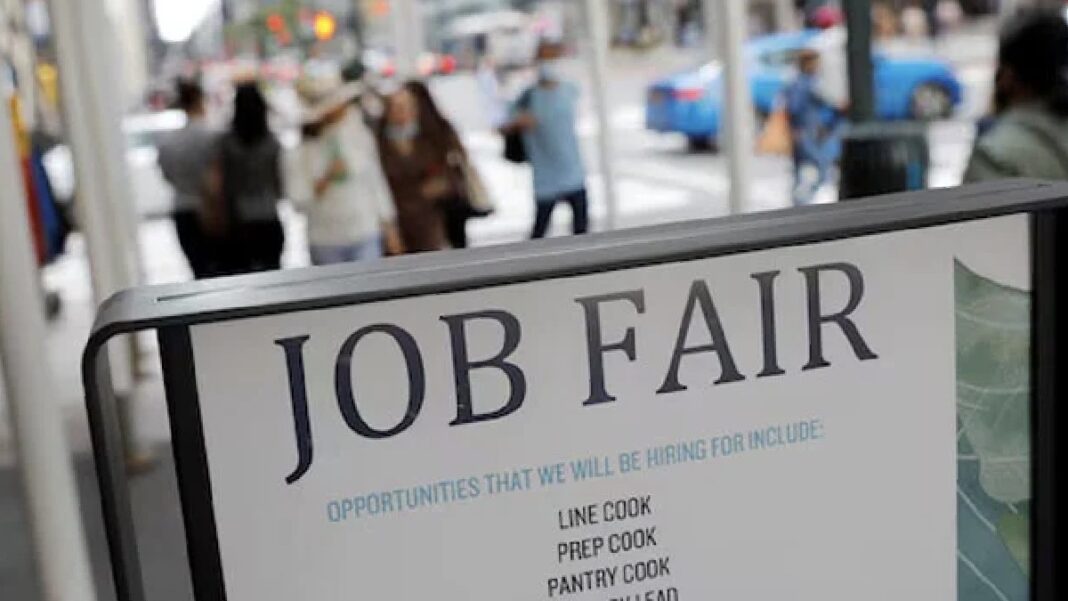
Strong Labor Data Lowers Expectations of Rate Cuts
New applications for U.S. unemployment benefits rose modestly last week, suggesting the labor market remains stable and giving the Federal Reserve room to keep interest rates steady while assessing the economic impact of tensions involving Iran.
Initial claims for state unemployment benefits increased by 16,000 to a seasonally adjusted 219,000 for the week ending April 4, according to the Labor Department. Economists surveyed by Reuters had expected 210,000 new claims. The relatively low level of layoffs indicates employers have not yet significantly adjusted staffing levels despite rising oil prices linked to geopolitical developments.
President Donald Trump announced on Tuesday a two-week ceasefire proposal contingent on Iran reopening the Strait of Hormuz, a key global oil shipping route that has been disrupted. Oil price volatility has pushed the average U.S. gasoline price above $4 per gallon for the first time in more than three years. Market turbulence also erased roughly $3.2 trillion in stock market value in March.
Economists expect inflation pressures to intensify. The Consumer Price Index is projected to increase by as much as 1.0% in March, bringing annual inflation to approximately 3.3%, still above the Federal Reserve’s 2% target.
Minutes from the Fed’s March 17–18 policy meeting showed a growing number of policymakers believe interest rate increases may be necessary to contain inflation. The central bank maintained its benchmark interest rate in the 3.50%–3.75% range, and expectations for rate cuts this year have declined significantly.
Fed officials broadly anticipate unemployment will remain relatively stable, with modest job creation and limited labor force growth. However, some policymakers expect conditions in the labor market to weaken slightly.
Economists describe the current labor environment as a “low-hire, low-fire” phase, reflecting caution among employers amid uncertainty tied to tariffs and immigration policies.
Although nonfarm payrolls increased by 178,000 jobs in March, the median duration of unemployment rose to 11.4 weeks, the highest level in nearly four and a half years, indicating job seekers are taking longer to find employment.
Continuing claims, which measure the number of people receiving ongoing unemployment benefits and can signal hiring trends, fell by 38,000 to a seasonally adjusted 1.794 million for the week ending March 28. However, the decline may partly reflect individuals exhausting eligibility for benefits, which typically last up to 26 weeks in most states.
Younger workers have been particularly affected by the slow-moving labor market, as many lack sufficient work history to qualify