
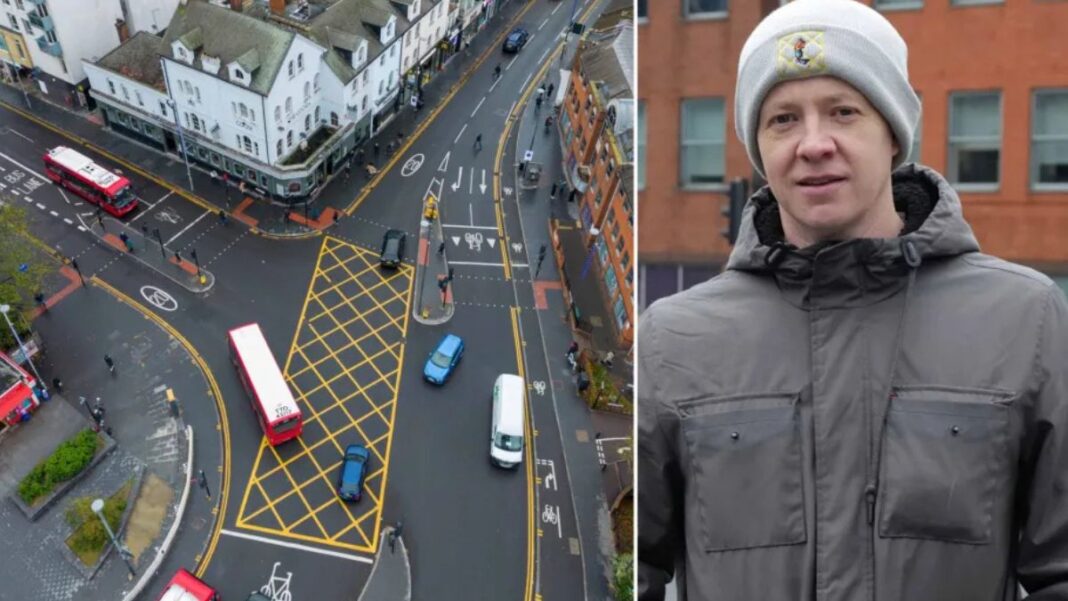
Helping Drivers Fight Unfair Yellow Box Penalties
They’re the “lean, mean, money-making machines” that strike fear into even the most careful motorists.
Yellow box junction cameras issue tens of thousands of penalties each year — but what happens when a driver has done nothing wrong?
One man is taking on councils he says are wrongly penalising law-abiding road users.
Sam Wright, 48, a chartered engineer and former Transport for London (TfL) specialist who once approved yellow box designs, claims authorities are misleading drivers into believing they have broken the law.
Wright has become a social-media watchdog. His TikTok videos — exposing questionable fines and guiding followers through appeals — regularly draw thousands of viewers. Over the past 18 months, he has helped overturn hundreds of penalty charge notices (PCNs).
“Right now, a lot of drivers are being ripped off. The system is extremely unfair,” he told Metro.
“People are receiving tickets even when they haven’t done anything wrong. Councils are quoting the law in a way that convinces them they’re guilty.”
Yellow box junctions are intended to prevent vehicles from blocking junctions when traffic is stationary. Yet some alleged infringements border on the absurd — including a motorcyclist whose wheel hung a few centimetres over the box, and a driver caught inside for mere seconds. Both received London fines of £160, reduced to £80 if paid promptly.
Wright succeeded in getting both cases withdrawn — but only after councils initially rejected the appeals with standardised “template letters.” Councils backed down only when an adjudicator review loomed. Wright insists these PCNs should never have been issued in the first place.
“It’s about revenue,” he says. “If you take an appeal to an adjudicator, the fine doubles. Councils know most people won’t take that risk. They send template replies that ignore the actual points being raised. No one listens, and people panic when £160 is at stake.”
More than 32,000 yellow-box fines were issued last year. Wright believes many motorists simply pay up, unaware they may be completely in the clear.
During a visit to a controversial Walthamstow junction with Metro, Wright pointed out that the yellow box there is 50% larger than necessary. A study he carried out for the RAC found that almost every one of 100 junctions examined in London and Cardiff was oversized, extended beyond permitted areas or incorrectly positioned — problems that contribute to countless unjust penalties.
But Wright argues the biggest issue lies in how the law is presented to drivers.
The Law vs. the Highway Code
Most councils cite the Highway Code instruction:
“You must not enter the box until your exit road or lane is clear.”
But according to the actual legislation, an offence only occurs when a driver enters the box and then stops due to stationary vehicles blocking the exit.
This means, Wright says:
- If you enter legally but later have to stop because someone suddenly changes lanes, it is not an offence.
- If you stop voluntarily — for example, to leave space for a pedestrian crossing — it is not an offence.
- The offence begins only at the moment of entry, not afterwards.
One driver fined on Lea Bridge Road illustrates the point. He stopped inside the box to keep a pedestrian crossing clear, despite having space to exit. Wright argued the stop was a choice, not a result of stationary traffic. The council issued a template rejection but later withdrew the PCN before the adjudicator hearing.
“Authorities often quote the Highway Code as if it’s the law,” Wright said. “It’s sneaky.”
Calls for Reform
Since 2021, councils outside London and Cardiff have also gained enforcement powers — a move critics say may encourage income-driven enforcement.
Wright is now leading a petition for changes, including:
- Aligning the Highway Code wording with the actual legislation
- Introducing a 10-second grace period in yellow boxes
- Urging the government to address inconsistencies and prevent misuse of fines
Official Responses
TfL maintains that yellow boxes are essential for keeping traffic moving and insists PCNs are issued strictly in line with the law, “to improve safety and reduce congestion, not to raise revenue.”
Waltham Forest Council says all its yellow boxes comply with national standards and any discrepancy between guidance and legislation is a matter for central government. Drivers who believe they’ve been wrongly fined are encouraged to challenge.
A Department for Transport spokesperson added that yellow boxes should be used to manage traffic, not generate income.


