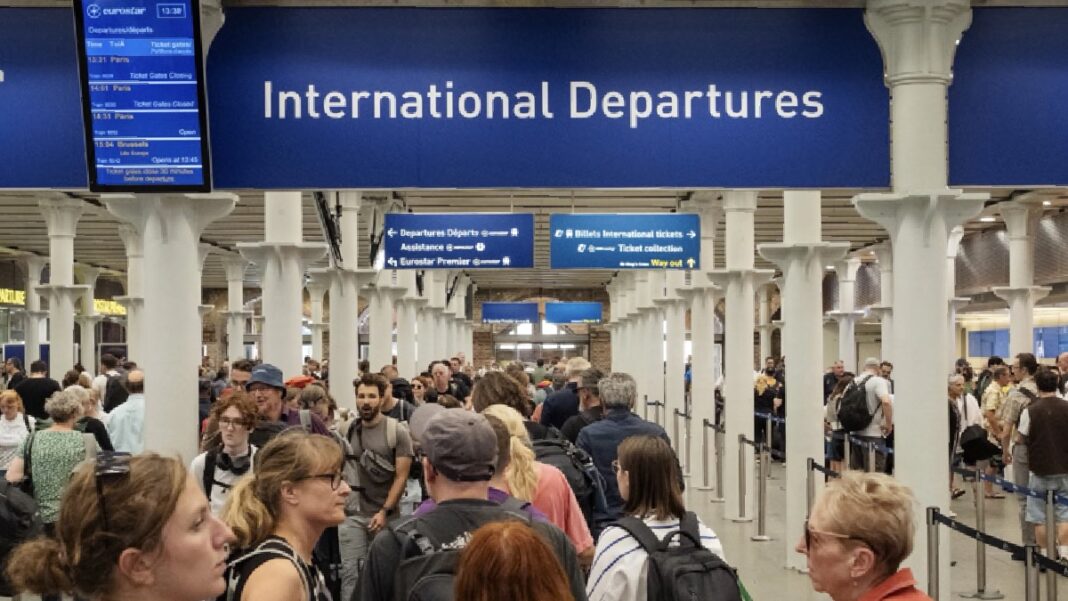
No new EU border biometrics for Eurostar yet
Passengers travelling between the UK and France via the Channel will not face new biometric border checks in the coming weeks, easing concerns about potential travel disruption during the Easter holiday period.
Although the EU’s Entry/Exit System (EES) is scheduled to require biometric data — including fingerprints and facial recognition — from most non-EU travellers starting 10 April, ports and operators say the technology needed to implement the checks is not yet fully ready in France. As a result, travellers using Eurostar, Eurotunnel’s Le Shuttle, and cross-Channel ferries will continue to have passports manually stamped for now.
The delay is due to technical challenges in deploying systems capable of capturing and processing biometric information. French border controls for these routes are located in the UK, meaning infrastructure upgrades must be completed before the system can operate smoothly. Currently, only lorry drivers, coach passengers, and ferry foot passengers are undergoing EES procedures after earlier trial phases began in November.
Despite the postponement, official EU websites still state that biometric registration will be required for entry into the Schengen area from April. UK government travel advice has encouraged passengers to allow extra time at borders, although Eurostar and Eurotunnel maintain that travellers should arrive according to the standard check-in times on their tickets.
The EES rollout has already faced delays across Europe. Some airports, including Lisbon and Brussels, have reported long queues as officials conduct biometric checks, while in other locations equipment has been installed but remains unused.
Transport operators have invested heavily in preparation. Eurotunnel’s parent company, Getlink, has spent at least £60 million installing kiosks at terminals in Folkestone and Coquelles, while Eurostar has invested around £10 million in automated kiosks at London St Pancras, which have yet to be activated. The Port of Dover has also redesigned traffic layouts and built additional facilities in anticipation of the new procedures.
Authorities say they are working to ensure a smooth introduction of the system and have prioritised minimising disruption while technical issues are resolved. EU guidance allows border officials to ease enforcement temporarily if queues become excessive, at least until the end of July.
However, airlines and airport operators remain concerned about the impact of EES during peak travel periods. Industry groups warn that operational difficulties could lead to significant delays, with some passengers already experiencing waiting times of several hours at certain airports. Critics argue the system risks adding further strain to European travel unless implementation challenges are resolved before the busy summer season.