Starbucks Workers Launch Strike on Red Cup Day
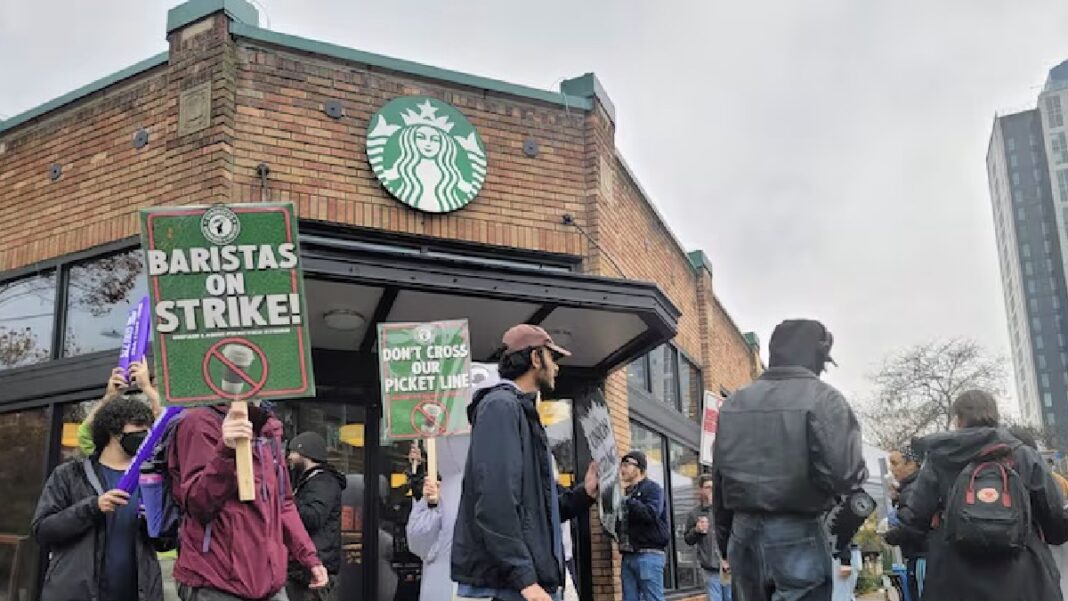
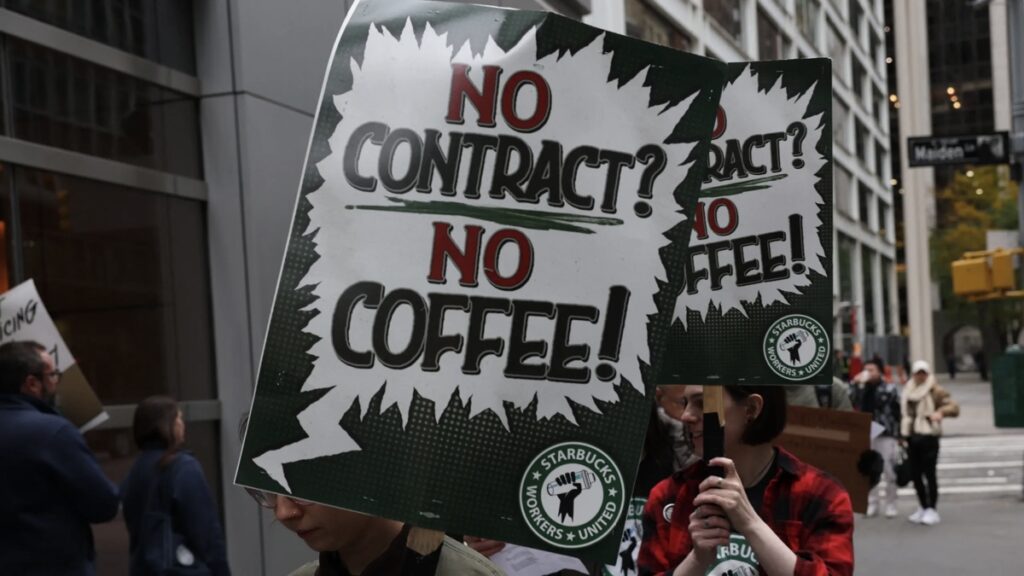
The strike, organized by Starbucks Workers United, aims to draw attention to stalled contract talks and ongoing concerns about wages, scheduling, and store conditions.
Union leaders said the strike had already forced several stores to close early in the day, and more closures were expected as the action continued.
Which Cities Are Affected?
According to the union, the strike is impacting stores in 45 major cities, including New York, Philadelphia, Minneapolis, San Diego, St. Louis, Dallas, Columbus, and Seattle — the company’s hometown.
There is currently no end date for the strike, and more locations may join if progress is not made at the bargaining table.
Starbucks, however, stated that the majority of its 10,000 company-operated U.S. locations remain open and that the company is on track to meet its sales expectations for the day.
Why Are Workers Striking?
No Progress in Contract Negotiations
Starbucks stores began unionizing in 2021.
The company previously pledged to finalize a union contract by the end of 2024.
Leadership changes in 2023 slowed negotiations, and both sides haven’t held a bargaining session since April.
Reduced Hours and Low Pay
Workers say many baristas struggle to get 20 hours per week, which is the threshold required to qualify for company benefits. Some employees report wages that remain too low to keep up with rising expenses.
Workplace and Labor Complaints
The union claims Starbucks has:
Fired pro-union workers,
Implemented policy changes without negotiation,
Ignored hundreds of unfair labor practice complaints.
Starbucks’ Position
Starbucks maintains it offers one of the strongest compensation and benefits packages in the retail industry, highlighting paid family leave and full tuition coverage for a four-year degree.
The company says it is ready to resume negotiations and argues that some union demands would significantly disrupt store operations.
Why This Strike Stands Out
Labor experts note that even though only around 550 Starbucks stores are unionized, actions like this can carry significant public visibility. Because Starbucks workers interact closely with customers, any disruption or protest sends a strong message — especially on a high-profile day like Red Cup Day.
Starbucks’ Recent Performance
Despite labor tensions, Starbucks recently reported a 1% increase in same-store U.S. sales, its first rise in nearly two years. The company has focused on redesigning stores, improving staffing during peak hours, and boosting in-store ordering.
Holiday merchandise, including the popular Bearista glass cup, sold out rapidly due to high demand.