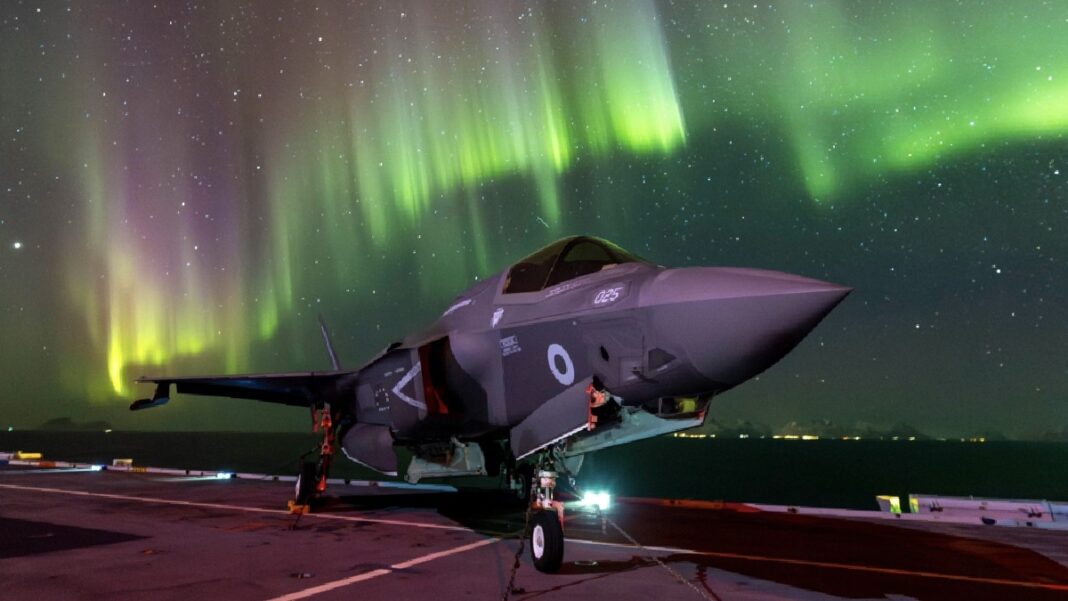
Northern Lights Visible Across the UK Tonight
A massive solar storm, described by experts as a “cannibal storm”, is set to strike Earth today, potentially causing Northern Lights displays, GPS disruptions, and power outages across the UK and beyond.
What Is a ‘Cannibal’ Solar Storm?
A cannibal solar storm occurs when multiple coronal mass ejections (CMEs)—huge bursts of charged solar plasma—collide in space and combine into one powerful wave. The British Geological Survey (BGS) reports this is one of the largest geomagnetic storms in 20 years.
According to Jim N. R. Dale, senior meteorologist at the British Weather Services, this geomagnetic event could cause global communication “fallouts,” affecting GPS, internet, and power systems.
Solar Storm Impact: Power, Satellites, and Astronauts at Risk
The U.S. space weather authorities have issued a severe solar storm warning, noting that the influx of solar particles poses increased risks to satellite systems.
The alert warns: “Power system voltage irregularities possible; false alarms may be triggered on some protection devices.”
Astronauts in orbit could experience heightened radiation exposure, though people on Earth remain protected by the planet’s magnetic field.
When and Where to See the Northern Lights in the UK
The aurora borealis—typically seen in the Arctic regions of Iceland, Canada, and Alaska—will likely be visible across much of the UK tonight, thanks to the intense geomagnetic activity.
AuroraWatch UK has issued five red alerts, meaning the Northern Lights may be visible by eye and camera from anywhere in the UK.
An amber alert later indicated the phenomenon would be clearest in Scotland, northern England, and Northern Ireland around 9 p.m..
Latest Forecast from the Met Office
According to the Met Office, solar winds remain “very strong and turbulent” but are expected to ease by tomorrow.
Aurora sightings are most likely tonight, especially in northern regions, before diminishing by Thursday morning.
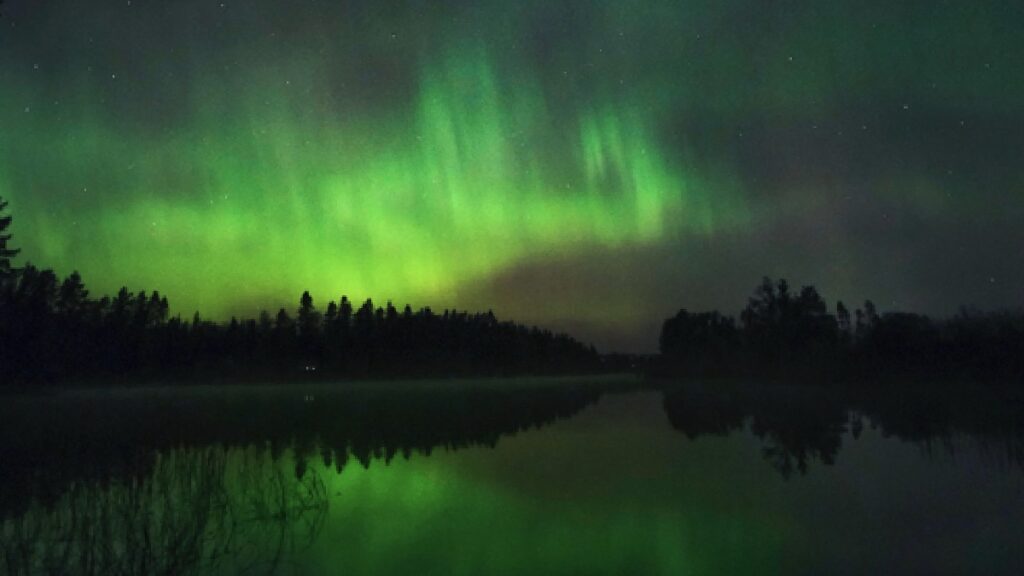
What Causes the Northern Lights?
The Earth’s magnetic field shields the planet from charged solar particles. When these particles collide with gases in the upper atmosphere, they create the glowing curtains of color known as the Northern Lights.
The peak aurora season runs from September to mid-March, but during periods of high solar activity—like the current solar maximum in the Sun’s 11-year cycle—the lights can appear at lower latitudes, including parts of England and Wales.
What Do the Colors Mean?
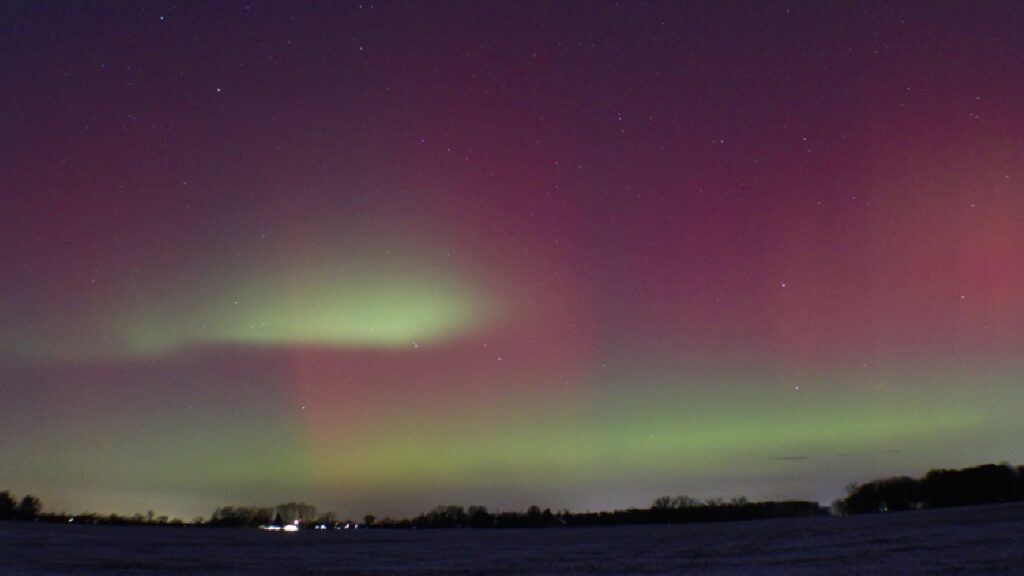
Green: Oxygen at lower altitudes
Red: Oxygen at higher altitudes
Pink, Blue, or Purple: Nitrogen reacting with solar particles
These dazzling colors occur as solar plasma interacts with different atmospheric gases at varying altitudes.
Best Places to See the Aurora Tonight
If you’re hoping to witness the Northern Lights, head to a dark, rural area away from city lights.
North-facing coastlines or elevated viewpoints offer the best visibility. You can check light pollution maps to find the darkest locations near you.
photo: social media